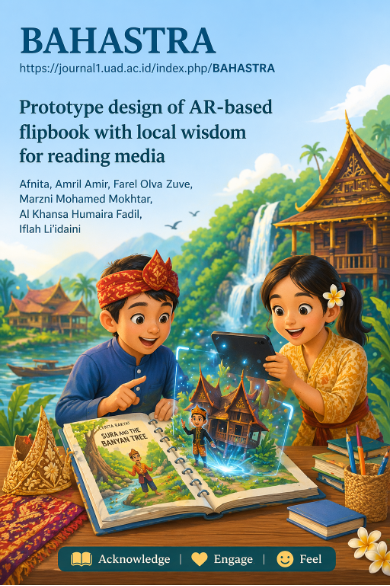
Prototype design of AR-based flipbook with local wisdom for reading media
DOI:
https://doi.org/10.26555/bs.v46i1.1813Keywords:
Augmented Reality , Development , Flipbook , Local Wisdom , Reading SkillAbstract
This research is motivated by a critical educational paradox in West Sumatra, where high public reading interest indexes contradict the low functional reading competence among secondary school students. This cognitive discrepancy is primarily caused by the reliance on nationally standardized teaching materials that alienate students from their socio-cultural environment. To address theoretical and practical gaps in digital ethnopedagogy, this research aims to systematically design a conceptual blueprint of an interactive flipbook prototype that utilizes Augmented Reality (AR) to materialize abstract Minangkabau cultural concepts. The methodology employed in this research is a descriptive-analytical approach focused specifically on a preliminary study and conceptual design. The scope of this research is deliberately delimited to comprehensive needs analysis and structural product design. Empirical data were gathered from eighth-grade students and teachers at SMP Negeri 7 Padang through questionnaires, interviews, and document analysis, utilizing ethnopedagogy as an analytical tool and cognitive multimedia theories as a reference framework. The findings of this research empirically confirmed a critical demand for interactive visual media rooted in the socio-cultural environment. Based on these needs, the design phase in this research successfully formulated a pedagogically sound blueprint integrating the 5M scientific approach with immersive 3D AR features, wherein local cultural icons are represented as analytical case studies for popular scientific texts. In conclusion, this research establishes a novel pedagogical framework synergizing immersive technology and local wisdom. For future academic endeavors, transitioning from the structural blueprint of this research to empirical technological development is highly recommended to quantitatively evaluate its effectiveness in improving reading literacy.
References
Aditiawarman, M., Ulya, R. H., Chairani, Z., & Yunita, W. (2025). A mixed-methods study of creole Minangkabau language of Chinese speakers in Padang, Indonesia: Implications for second or third language learning. International Journal of Learning, Teaching, and Educational Research, 24(6), 948–970. https://doi.org/10.26803/ijlter.24.6.43
Adzidzah, N., & Yudiawan, A. (2024). Hots-based formative assessment: The key to improving the quality of learning. Journal of Quality Assurance in Islamic Education (JQAIE), 4(2), 109–120. https://doi.org/10.47945/jqaie.v4i2.1670
Afnita, Efrianto, Ansoriyah, S., Lubis, F., Ifnaldi, Zulfikarni, JR, V. T. D., Mamat, S., Ulya, R. H., Rachman, A., & Nurrahmah, F. (2025). Developing CTL-Based digital media e-worksheet for second language learning. Forum for Linguistic Studies, 7(6), 103–121. https://doi.org/10.30564/fls.v7i6.9665
Afnita, Husein, A., & Ulya, R. H. (2023). Interactive e-book model based on local wisdom as a media for learning exposition text reading skills. Al-Ta’lim Journal, 30(1), 201–211. https://doi.org/10.15548/jt.v30i3.781
Agung, A., Vira, A., Putri, W., Widiana, I. W., & Rini, M. G. (2024). Media augmented reality belajar membaca untuk menumbuhkan kemampuan kognitif dan literasi membaca awal anak usia dini. Journal of Education Action Research, 8(3), 504–512. https://doi.org/10.23887/jear.v8i3.83973
Agustina, A., Ramadhan, S., & Asri, Y. (2016). Muatan kearifan lokal dalam cerpen mukhtahir karya cerpenis Minangkabau. Humanus, 15(1), 14–31. https://doi.org/10.24036/jh.v15i1.6408
Al-ansi, A. M., Jaboob, M., Garad, A., & Al-ansi, A. (2023). Analyzing augmented reality (AR) and virtual reality (VR) recent development in education. Social Sciences & Humanities Open, 8(1), 100532. https://doi.org/10.1016/j.ssaho.2023.100532
Almos, R., Ermanto, & Ardi, H. (2025). Digital-based dictionary compilation: Exploring practical steps technological tools, and pragmatic analysis in lexicography. International Journal of Learning, Teaching and Educational Research, 24(3), 277–294. https://doi.org/10.26803/ijlter.24.3.13
Amir, A., & Afnita, A. (2019). Analysis of reading comprehension skills reviewed from the literacy level of reading students in higher education. Proceedings of the 2nd International Conference on Language, Literature and Educatio, 1–6. https://doi.org/10.4108/eai.19-7-2019.2289481
Anggeraini, Y., Faridi, A., Mujiyanto, J., & Bharati, A. L. (2019). Literasi digital: Dampak dan tantangan dalam pembelajaran bahasa. Seminar Nasional Pascasarjana, 2(1), 386–389.
Apriliyani, S. W., & Mulyatna, F. (2021). Flipbook E-LKPD dengan pendekatan etnomatematika pada materi teorema phytagoras. Prosiding Seminar Nasional Sains, 2(1), 491–500.
Asrial, Kurniawan, D. A., & Luthfiah, Q. (2022). Strengthening the love of reading character by using an electronic module based on local wisdom. International Journal of Elementary Education, 6(1), 165–172.
Cargando, R. V, & Jacela, Z. A. P. (2025). Teachers’ difficulties in teaching reading. International Multidisciplinary Journal of Research for Innovation, Sustainability, and Excellence (IMJRISE), 2(9), 11–26.
Counsil, D. E. (2024). Global AI student survey 2024 AI or not AI: What students want.
Ebinger, F., Buttke, L., & Kreimeier, J. (2022). Augmented and virtual reality technologies in education for sustainable development: An expert-based technology assessment. Journal for Technology Assessment in Theory and Practice, 31(1), 28–34. https://doi.org/10.14512/tatup.31.1.28
Erni, E., Azhar, F., & Vai, A. (2023). Developing local wisdom-based e-module in reading and writing course for tertiary students in Indonesia. Al-Ishlah: Jurnal Pendidikan, 15(2), 2577–2590. https://doi.org/10.35445/alishlah.v14i1.973
Fajri, T. A. Al. (2018). Pentingnya penggunaan pendekatan multimodal dalam pembelajaran. Waskita: Jurnal Pendidikan Nilai dan Pembangunan Karakter, 2(1), 57–72. https://doi.org/10.21776/ub.waskita.2018.002.01.5
Fendi, H., Agustina, & Thahar, H. E. (2024). Development of digital comics-based learning materials incorporating local wisdom and character values in indonesian language education for junior high school students. Evolutionary Studies in Imaginative Culture, 8(1), 541–549.
Firdaus, M. R., Irawan, R. R., Mahardika, C. H. Y., Gaol, P. L., & Prinaryanto, B. A. (2024). Tantangan teknologi artificial intelligence pada kegiatan pembelajaran mahasiswa. IJEDR: Indonesian Journal of Education and Development Research, 2(1), 379–384. https://doi.org/10.57235/ijedr.v2i1.1781
Furenes, M. I., Kucirkova, N., & Bus, A. G. (2021). A comparison of children’s reading on paper versus screen: A meta-analysis. Review of Educational Research, 91(4), 483–517. https://doi.org/10.3102/0034654321998074
Gea, E., Rukmanti, F., Mulianti, D., Manik, B., & Hulu, A. D. (2024). Strategi guru dalam mengembangkan kemampuan literasi siswa di sekolah dasar. Sinar Dunia: Jurnal Riset Sosial Humaniora dan Ilmu Pendidikan, 3(3). https://doi.org/10.58192/sidu.v3i3.2413
Ghaluh, B. M., Afnita, & Wulandari, E. (2022). Analisis kebutuhan e-book interaktif berbasis kearifan lokal dalam pembelajaran teks eksposisi. 1(4), 526–536. https://doi.org/10.24036/jpers.v1i4.111
Haleem, A., Javaid, M., Qadri, M. A., & Suman, R. (2022). Understanding the role of digital technologies in education: A review. Sustainable Operations and Computers, 3(February), 275–285. https://doi.org/10.1016/j.susoc.2022.05.004
Haryati, G., & Kuning, D. S. (2024). The influence of team quiz strategy on students’ reading comprehension of explanation text at the eleventh grade of SMAN 1 Sungkai Utara Academic Year 2023/2024. Griya Cendikia, 9(2), 696–703. https://doi.org/10.47637/griyacendikia.v9i2.1628
Hermawan, A. (2019). Pengembangan media pembelajaran berbasis augmented reality untuk meningkatkan motivasi belajar siswa. Jurnal Teknologi Pendidikan, 12(2), 135–145.
Hiasa, F., Supandi, & Wisman. (2024). Development of picture story learning media based on the Buayo Kuning folklore assisted by augmented reality technology in regional literature courses. BAHASTRA: Jurnal Pendidikan Bahasa dan Sastra Indonesia, 44(1), 143–161. https://doi.org/10.26555/bs.v44i1.630
Indrayadi, T., Yandri, H., & Kamil, D. (2020). The effect of contextual teaching and learning on reading comprehension. Indonesian Research Journal in Education, 4(2), 569–583. https://doi.org/10.22437/irje.v4i2.9017
Khellab, F., O¨zcan Demirel, & Mohammadzadeh, B. (2022). Effect of teaching metacognitive reading strategies on reading comprehension of engineering students. Sage Open, 12(4), 1–19. https://doi.org/10.1177/21582440221138069
Kisayani, & Laksono. (2019). Guru sebagai teladan literasi. Kementerian Pendidikan dan Kebudayaan
Klassen, K. (2020). The effect of cultural familiarity on reading comprehension: An approximate replication of Erten and Razi (2009). Reading Psychology, 41(3), 205–228. https://doi.org/10.1080/02702711.2020.1768976
Kurnia, U., Rahmi, U., & Bentri, A. (2025). Development of interactive learning media based on google sites in physics learning for class XI. Jurnal Penelitian Pendidikan IPA, 11(10), 214–221. https://doi.org/10.29303/jppipa.v11i10.12329
Lewis, A. A. (2025). Unpacking cultural bias in AI language learning tools: An analysis of impacts and strategies for inclusion in diverse educational settings. International Journal of Research and Innovation in Social Science, 9(1), 1878–1892. https://doi.org/10.47772/IJRISS.2025.9010151
Magableh, I. S. I., & Abdullah, A. (2021). The impact of differentiated instruction on students’ reading comprehension attainment in mixed-ability classrooms. Interchange, 52, 255–275. https://doi.org/10.1007/s10780-021-09427-3
Maritsa, A., Salsabila, U. H., Wafiq, M., Anindya, P. R., & Ma’shum, M. A. (2021). Pengaruh teknologi dalam dunia pendidikan. Al-Mutharahah, 18(2), 91–100. https://doi.org/10.46781/al-mutharahah.v18i2.303
Marwan, & Yuliantri, R. D. A. (2023). Investigating the impacts of flipbook media on middle school students’ learning interests in history. Al-Ishlah: Jurnal Pendidikan, 15(1), 795–804. https://doi.org/10.35445/alishlah.v15i1.3011
Mhlongo, S., Mbatha, K., Ramatsetse, B., & Dlamini, R. (2023). Challenges, opportunities, and prospects of adopting and using smart digital technologies in learning environments : An iterative. Heliyon, 9(6), e16348. https://doi.org/10.1016/j.heliyon.2023.e16348
Muryanti, E., Pransiska, R., Novrianti, Ummayah, Y. A., & Azman, M. N. A. (2023). Teachers’ acceptance and readiness to use augmented reality book to teach english vocabulary in kindergartens. JOIV: International Journal on Informatics Visualization, 7(4), 2351–2357. https://doi.org/10.30630/joiv.7.4.02168
Naufal, H. A. (2021). Literasi digital. Perspektif, 1(2), 195–202. https://doi.org/10.53947/perspekt.v1i2.32
Noviani, R., Nugraha, E., & Rustandi, A. (2023). Penerapan model problem based learning berbantuan flipbook dalam pembelajaran membaca pemahaman teks iklan pada peserta didik kelas VIII SMP Negeri 25 Kota Bandung. JISPENDIORA: Jurnal Ilmu Sosial, 2(2), 143–157. https://doi.org/10.56910/jispendiora.v2i2.655
Nurchasanah, I. (2024). Pengaruh penggunaan metode CIRC (Cooperative integrated reading and composition) dan kemampuan berpikir kritis terhadap kemampuan membaca pemahaman siswa SMP Negeri 1 Jiwan tahun pelajaran 2024/2025. Universitas PGRI Madiun.
Nurrahmah, F., & Afnita. (2025). Scaffolding structural thinking in critical reading: A quasi- experimental study on CTL-based liveworksheets. Jurnal Pendidikan Progresif, 15(4), 2652–2667. https://doi.org/10.23960/jpp.v15i4.pp2652-2667
Paculdar, L. J. C. (2025). The effectiveness of interactive reading resources in developing word recognition reading skills. International Journal of Social Science and Human Research ISSN, 8(3), 1579–1598. https://doi.org/10.47191/ijsshr/v8-i3-34
Pantiwati, Y., Permana, F. H., Kusniarti, T., Novian, T., & Sari, I. (2020). Model pembelajaran Li-Pro-GP (Literasi berbasis proyek terintegrasi GLS dan PPK). Simposium Prosiding Multidisiplin Nasional Universitas Muhammadiyah Tangerang, 79–84. https://doi.org/10.31000/sinamu.v2i0.3593
Pratiwi, A., Makki, M., Istiningsih, S., & Fauzi, A. (2024). Analisis faktor penyebab kesulitan siswa dalam memahami isi bacaan cerita. Journal of Classroom Action Research, 6(3), 596–600.
Pujiastuti, I., Damaianti, V. S., & Syihabuddin. (2022). Building reading comprehension in college students through post-reading activities. Diglosia: Jurnal Kajian Bahasa, Sastra, dan Pengajarannya, 5(1), 119–134. https://doi.org/10.30872/diglosia.v5i1.356
Rachim, M. R., Salim, A., & Qomario. (2024). Pemanfaatan augmented reality sebagai media pembelajaran terhadap keterampilan belajar siswa dalam pendidikan modern. JRIP: Jurnal Riset Dan Inovasi Pembelajaran, 4(1), 594–605. https://doi.org/10.51574/jrip.v4i1.1407
Sadya, S. (2023). Pengguna smartphone Indonesia terbesar keempat dunia pada 2022. Dataindonesia.Id.
Salahuddin, A., Friska, S. Y., Anggun, A., & Dilla, O. (2023). Pengembangan e-book cerita bergambar pembelajaran bahasa Indonesia pada elemen membaca berbantukan flipbook maker. Attadrib: Jurnal Pendidikan Guru Madrasah Ibtidaiyah, 6(1), 149–158. https://doi.org/10.54069/attadrib.v6i1.456
Sambayon, J. T., Luceñara, D. P., Luceñara, C. P., Bayron, Q. M., Peñaloga, R. A., & Larombe, E. A. (2023). Effectiveness of contextualized learning materials in improving the reading skills and comprehension level of the students. Psychology and Education: A Multidiciplinary Journal, 7(1), 435–444.
Simarmata, J., Sari, D. C., Purba, D. M., Mufarizuddin, & Hasibuan, M. S. (2019). Inovasi pendidikan lewat transformasi digital.
Smith, R., Snow, P., Serry, T., Hammond, L., Smith, R., Snow, P., Serry, T., & Hammond, L. (2021). The role of background knowledge in reading comprehension: A critical review. Reading Psychology, 42(3), 214–240. https://doi.org/10.1080/02702711.2021.1888348
Subandiyah, H., Nasrullah, R., Ramadhan, R., Supratno, H., Raharjo, R. P., & Lukman, F. (2025). The impact of differentiated instruction on student engagement and achievement in Indonesian language learning. Cogent Education, 12(1), 2516378. https://doi.org/10.1080/2331186X.2025.2516378
Subon, F. (2016). Direct vocabulary instruction: The effects of contextualised word families on learners’ vocabulary acquisition. Procedia-Social and Behavioral Sciences, 224(August 2015), 284–291. https://doi.org/10.1016/j.sbspro.2016.05.461
Sukenti, D., Agustina, & Fauzan, A. (2024). Self-esteem Islamic behavior and writing assessment for Indonesian language madrasa teachers: An empirical phenomenological investigation. Nazhruna: Jurnal Pendidikan Islam, 7(3), 570–589. https://doi.org/10.31538/nzh.v7i3.31
Suryaningsih, A. (2019). Gagasan pengembangan augmented reality pada buku bacaan sebagai upaya meningkatkan minat baca siswa (Adaptasi percepatan literasi dari Korea Selatan). Ideaguru: Jurnal Karya Ilmiah Guru, 4(1), 35–42. https://doi.org/10.51169/ideguru.v4i1.80
Topping, K. J., Douglas, W., Robertson, D., & Ferguson, N. (2022). Effectiveness of online and blended learning from schools : A systematic review. Review of Education, 10(2), 1–41. https://doi.org/10.1002/rev3.3353
Tressyalina, Noveria, E., Arief, E., Wulandari, E., & Ramadani, N. T. (2023). Analysis of the interactive e-worksheets needs based on local wisdom in expository text learning. Educaniora: Journal of Education and Humanities, 1(1), 23–31. https://doi.org/10.59687/educaniora.v1i1.1
Utama, I. W. K., Rahayu, K. M., Azizah, L. F., Winarti, Sitopu, J. W., & Wiliyanti, V. (2024). Pengaruh penggunaan teknologi augmented reality dalam pembelajaran IPA terhadap pemahaman materi pembelajaran. Jurnal Review Pendidikan dan Pengajaran, 7(3), 7813–7821.
Vaida, S., & Pongracz, G. (2022). Mobile augmented reality applications in higher education. Educatia 21 Journal, 23(69–76). https://doi.org/10.24193/ed21.2022.23.07
Villarente, M. D., & Moral, R. V. (2021). Teaching strategies and their effect on reading comprehension performance of junior high school students in inclusive classroom setting. Journal of Effective Teaching Methods (JETM), 2(1), 134–149. https://doi.org/10.59652/jetm.v2i1.138
Vonna, A. M., Saputra, N. N., & Saleh, H. (2022). Pengembangan media pembelajaran berbasis kontekstual lembar kerja peserta didik elektronik (E-LKPD) berbantuan liveworksheet. Seminar Nasional Pendidikan Matematika UMT 2022, 149–157.
Willian. (2025). Literasi dan numerasi siswa di Sumbar Rendah. Padek Jawa Pos.
Yapp, D., Graaff, R. De, & Bergh, H. van den. (2023). Effects of reading strategy instruction in English as a second language on students’ academic reading comprehension. Language Teaching Research, 27(6), 1456–1479. https://doi.org/10.1177/1362168820985236
Yuniarti, A., Titin, Safarini, F., Rahmadia, I., & Putri, S. (2023). Media konvensional dan media digital dalam pembelajaran. Journal Education and Technology, 4(2), 84–95. https://doi.org/10.31932/jutech.v4i2.2920
Additional Files
Published
Issue
Section
License
Copyright (c) 2026 Afnita, Amril Amir, Farel Olva Zuve, Marzni Mohamed Mokhtar, Al Khansa Humaira Fadil, Iflah Li’idaini

This work is licensed under a Creative Commons Attribution-ShareAlike 4.0 International License.
1.jpg)