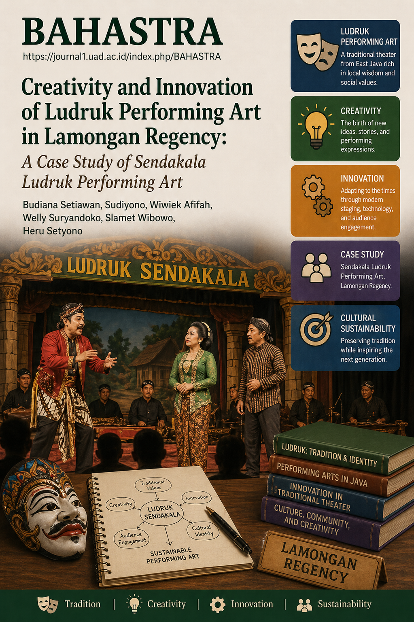
Creativity and innovation of Ludruk performing art in Lamongan Regency: A case study of Sendakala Ludruk performing art
DOI:
https://doi.org/10.26555/bs.v46i1.1628Keywords:
Creativity and Innovation , Cultural Revitalization , Ludruk Performing Arts , Traditional Performing ArtsAbstract
Creativity and innovation in ludruk need to be done because this traditional art is already on the verge of extinction. The lack of regeneration of interested young people and changes in people's tastes are the dominant factors causing the extinction of Ludruk. Without creative efforts in packaging ludruk to be relevant to the current context, supported by innovations in the presentation and use of technology, this cultural heritage is at risk of being lost in the next decade. This research aims to find out the creativity and innovation that needs to be done to preserve Ludruk art performances. The research method applied is qualitative. The research location is in the Ludruk Lamongan community. Data collection techniques include observation, interviews, and focused discussions. The results of the study showed that the creativity carried out by the Sendakala community included intensive practice before the performance; preparation of the manuscript as a guide for conducting dialogues; shortening of the duration of the show; colossal Ludruk performances; and collaboration with other Ludruk communities. Innovations include the dissemination of Ludruk art performances to schools; management improvement where there is a division of duties between stage directors, music directors, and dance directors; the use of technology to support the background of the scene; and the use of publications through social media. The creativity and innovation carried out by the Sendakala group is part of the revitalization effort to preserve Ludruk art performances in Lamongan Regency.
References
Agus, C., Saktimulya, S. R., Dwiarso, P., Widodo, B., Rochmiyati, S., & Darmowiyono, M. (2021). Revitalization of local traditional culture for sustainable development of national character building in Indonesia. Innovations and traditions for sustainable development. Springer. https://doi.org/10.1007/978-3-030-78825-4_21
Amabile, T. M., & Mueller, J. S. (2024). Studying creativity, its processes, and its antecedents: An exploration of the componential theory of creativity. Handbook of organizational creativity. Psychology Press. https://doi.org/10.4324/9781003573326-3
Alwasilah, A. C. (2006). Pokoknya Sunda: Interpretasi untuk aksi. Kiblat.
Amabile, T. M. (1996). Creativity in context: Update to “The Social Psychology of Creativity”. Westview Press.
Badan Pengembangan dan Pembinaan Bahasa. (2016). Kamus Besar Bahasa Indonesia VI Daring. Badan Pengembangan dan Pembinaan Bahasa, Kementerian Pendidikan Kebudayaan Riset dan Teknologi Republik Indonesia. https://kbbi.kemdikbud.go.id/entri/kolosal
Bing, N., Daoruang, K., & Sankaburanurak, A. (2024). The creation of rural revitalization and cultural heritage exhibition developed from case studies. Sciences of Conservation and Archaeology, 36(4), 251–264. https://sci-arch.org/index.php/wwbhen/article/view/109
Dinas Pariwisata dan Kebudayaan Kabupaten Lamongan. (2021). Pagelaran ludruk Sendakala. https://lamongantourism.com/pagelaran-ludruk-sendakala/
Glăveanu, V. P. (2020). A sociocultural theory of creativity: Bridging the social, the material, and the psychological. Review of General psychology, 24(4), 335-354. https://doi.org/10.1177/1089268020961763
Geertz, C., & Mahasin. (1983). Abangan, santri, priyayi dalam masyarkat Jawa. PT Dunia Pustaka Jaya.
Gill, P., Stewart, K., Treasure, E., & Chadwick, B. (2008). Methods of data collection in qualitative research: Interviews and focus groups. British Dental Journal, 204(6), 291-295. https://doi.org/10.1038/bdj.2008.192
Gilson, L. L. (2024). Why be creative: A review of the practical outcomes associated with creativity at the individual, group, and organizational levels. Handbook of Organizational Creativity. https://doi.org/10.4324/9781003573326-16
Hargianto, D., Sariyatun, & Wahyuni, S. (2016). Perkembangan seni ludruk Kirun dan relevansinya untuk meningkatkan apresiasi siswa terhadap budaya lokal. Jurnal Candi, 14(2), 42-59. https://jurnal.uns.ac.id/candi/article/view/42806
Hawkins, A. M., & Dibia. (2003). Bergerak menurut kata hati. Terjemahan I Wayan Dibia. Ford Foundation dan Masyarakat Seni Pertunjukan Indonesia.
Indrayuda, I., & Amirul, A. A. Bin. (2022). Transformation of traditional arts into entertainment arts: A case study of acting aspect and performance packaging. The International Journal of Visual Design, 16(1), 17. https://doi.org/10.18848/2325-1581/CGP/v16i01/17-34
Jindan, R. (2021). Peran edukasi dalam pementasan drama kolosal karya komunitas Roode Brug. GETER: Jurnal Seni Drama, Tari, dan Musik, 4(2), 96-103. https://doi.org/10.26740/geter.v4n2.p70-77
Kholifah, N., Subakti, H., Saputro, A. N. C., Nurtanto, M., Ardiana, D. P. Y., Simarmata, J., & Chamidah, D..(2021). Inovasi pendidikan. Yayasan Kita Menulis.
Mardityasari, F., & Abdillah, A. (2022). Manajemen dan proses kreatif ludruk luntas dalam lakon Dendam Genderuwo Kali Rungkut. APRON: Jurnal Pemikiran Seni Pertunjukan, 10(1).
Miles, M. B., & Huberman, M. (1992). Analisis data kualitatif. Penerbit Universitas Indonesia.
Mulyani, N. (2016). Pendidikan seni tari anak usia dini. Gava Media.
Nabila, A. (2023). Proses casting pemeran film.
Putri, A. G., Istiqomah, A., Zuhro, N. N., & Martdina, Y. N. (2024). Dampak modernisasi terhadap adanya budaya seni ludruk surya Utama di Desa Panduman, Kecamatan Jelbuk, Kabupaten Jember. Esensi Pendidikan Inspiratif, 6(2). https://doi.org/10.47134/bai.v1i1.2187
Rachmasari, F. A., & Permatasari, D. B. A. (2020). Challenging modernity: The Luntas, modern ludruk and young audiences’ acceptance. Simularca, 3(2), 139–152. https://doi.org/10.21107/sml.v3i2.7879
Ramadani, N., Wahyuningtyas, T., & Gusanti, Y. (2023). Potret ludruk Rukun Budaya sebagai pusat industri kreatif seni pertunjukan di Kabupaten Probolinggo. Jurnal Pendidikan dan Penciptaan SenI, 3(2), 113-123. https://doi.org/10.34007/jipsi.v3i2.374
Rahmadani, H. D., Widodo, J. P., Fitriani, A. (2023). Sejarah kesenian ludruk Irama Baru Kabupaten Sidoarjo tahun 2014-2019. Universitas PGRI Delta.
Ranjabar, J. (2006). Sistem sosial budaya Indonesia: Suatu pengantar. PT. Ghalia Indonesia
Rogers, E. M. (2003). Diffusion of innovation (Fifth Edition). Free Press.
Rokhim, N. (2018). Inovasi kesenian rakyat Kuda Lumping di Desa Gandu, Kecamatan Tembarak, Kabupaten Temanggung. Greget: Jurnal Pengetahuan dan Penciptaan Tari, 17(1), 83-90. https://doi.org/10.33153/grt.v17i1.2299
Sawyer, R. K., & Henriksen, D. (2024). Explaining creativity: The science of human innovation. Oxford University Press. https://doi.org/10.1093/oso/9780197747537.001.0001
Sinulingga, R. O., Sinulingga, N. N., & Nurhikmah, F. (2020). Globalization and its improvement for the life of Indonesian nation. International Conference Communication and Sosial Sciences (ICCOMSOS), 1(1). https://jurnal.uinsu.ac.id/index.php/ICCOMSOS/article/view/8305
Soedarsono, R. M., Suryo, D., & Haryono, T. (2010). Mainan tradisional di daerah lstimewa Yogyakarta dalam konteks perkembangan kreativitas anak. Ornamen, 7(2).
Srivastava, A. & Thomson, S.B. (2009). Framework analysis: A qualitative methodology for applied policy research. Journal of Administration & Governance, 4(2).
Sudjarwo, E. (2021). Ratusan seniman Lamongan pentaskan ludruk Lakon Sarip Tambak Oso Usai Divaksin. detikNews. https://news.detik.com/ berita-jawa-timur/d-5511809/ratusan-seniman-lamongan-pentaskan-ludruk-lakon-sarip-tambak-oso-usai-divaksin
Sufanti, M., Wahyudi, A. B., Fatimah, N., Purnomo, E., Noviana, S. T., Noviafitri, K. S., & Utomo, A. F. (2025). The level and forms of verbal creativity of microteaching student practitioners. BAHASTRA, 45(2), 447–467. https://doi.org/10.26555/bs.v45i2.1624
Sugihartati, R. (2020). Youth fans of global popular culture: Between prosumer and free digital labourer. Journal of Consumer Culture, 20(3), 305–323. https://doi.org/10.1177/1469540517736522
Sumanto. (2005). Pengembangan kreativitas seni rupa anak TK. Departemen Pendidikan Nasional.
Sumardjo, J. (2000). Filsafat seni. Penerbit ITB.
Triwardani, R., & Rochayanti, C. (2014). Implementasi kebijakan desa budaya dalam upaya pelestarian budaya lokal. ReformasI, 4(6).
Tjaturrini, D. (2018). Calengsai kreativitas dan inovasi pekerja seni dalam mempertahankan kesenian tradisional. Jurnal Ilmiah Lingua IdeA, 9(2), 1-12.
Vehar, J. (2020). Creativity and innovation: What is the difference? Encyclopedia of creativity, invention, innovation and entrepreneurship Springer. https://doi.org/10.1007/978-3-319-15347-6_10
Wallace, A. F. (1956). Revitalization movements. American Anthropologist, 58(2), 264-281. https://doi.org/10.1525/aa.1956.58.2.02a00040
Widjaja, A. W. (1986). Pelestarian budaya Sunda. Ranjabar.
Widyastuti, R. S. (2012). Revitalisasi tari gaya Surakarta. ISI Press.
West, M. A., & Richter, A. W. (2024). Climates and cultures for innovation and creativity at work. Handbook of organizational creativity. Psychology Press. https://doi.org/10.4324/9781003573326-11
Zhang, X., & Dai, J. (2021). Cultural and creative production in the era of globalization: Exploring the trans-border mobility of Chinese media and entertainment celebrities. Geoforum, 120, 198–207. https://doi.org/10.1016/j.geoforum.2021.02.001
Additional Files
Published
Issue
Section
License
Copyright (c) 2026 Wiwiek Afifah, Budiana Setiawan, Sudiyono Sudiyono, Welly Suryandoko, Slamet Wibowo, Heru Setyono

This work is licensed under a Creative Commons Attribution-ShareAlike 4.0 International License.
1.jpg)