Prospective physics teachers' perceived adaptation to virtual laboratories: an exploratory cross-sectional study
DOI:
https://doi.org/10.12928/jrkpf.v13i2.2390Keywords:
Perceived Adaptation, Prior Experience, Technology Readiness, Virtual LaboratoryAbstract
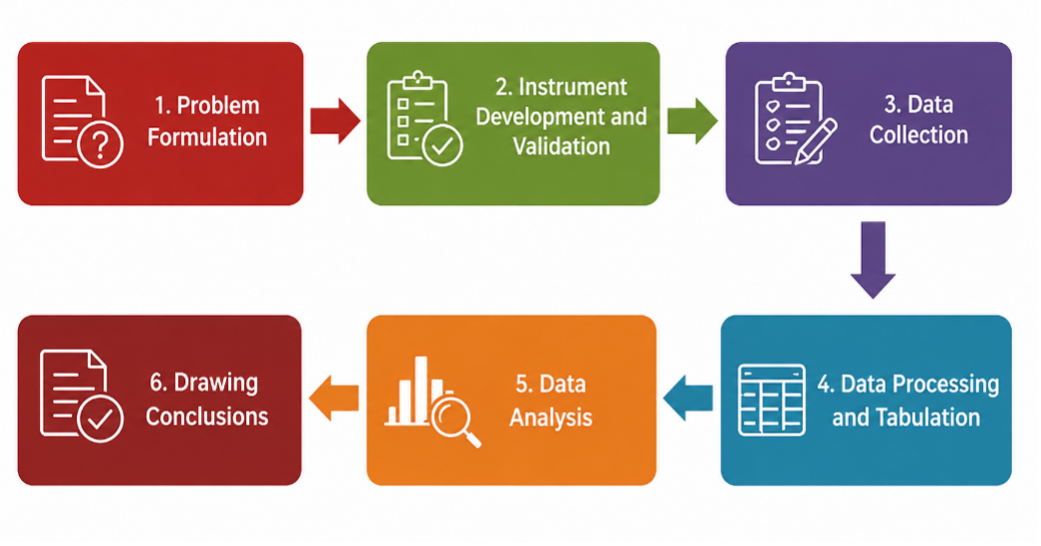
The use of virtual laboratories in physics education requires prospective physics teachers to adjust their knowledge, attitudes, behaviors, and pedagogical considerations when engaging with technology. This study aimed to examine the relationships and relative contributions of technology readiness, prior experience, and facilitating conditions to prospective physics teachers’ perceived adaptation to virtual laboratories. A quantitative approach with a cross-sectional survey design was employed. The sample consisted of 33 students from the Physics Education Study Program at Universitas Islam Negeri Ar-Raniry Banda Aceh, selected through total sampling. Data were collected using a five-point Likert-scale questionnaire that was reviewed by two experts for content validity and analyzed using descriptive statistics, Pearson correlation, and multiple linear regression with IBM SPSS Statistics version 25. The regression analysis was based on 27 complete cases. Within these cases, the model yielded an R² of 0.645, indicating that the three predictors jointly explained 64.5% of the observed variance in perceived-adaptation scores. Technology readiness and facilitating conditions showed positive and statistically significant regression coefficients, whereas prior experience did not make a statistically significant unique contribution after the other predictors were taken into account. The findings indicate that prospective physics teachers’ perceived adaptation to virtual laboratories is associated with both individual technology readiness and supportive conditions for technology use.
References
[1] N. Mafarja, H. Zulnaidi, and M. M. Mohamad, "Virtual learning environment to improve scientific literacy: a systematic review," Res. Sci. & Technol. Educ., vol. 44, no. 2, pp. 736-760, 2026, doi: https://doi.org/10.1080/02635143.2025.2547927
[2] N. Waight and K. Neumann, "21st-century science education digital ecologies: Technology, technique, shoelaces, promise, and pitfalls?," J. Res. Sci. Teach., vol. 57, no. 9, pp. 1313-1321, 2020, doi: https://doi.org/10.1002/tea.21667
[3] H. Kim, J. Song, and S. Ha, "TPACK expression patterns in preservice teachers' design of innovative physics teaching and learning materials," J. Comput. Assist. Learn., vol. 40, no. 4, pp. 1552-1566, 2024, doi: https://doi.org/10.1111/jcal.12965
[4] R. L. Reyes, K. P. Isleta, J. D. Regala, and D. M. R. Bialba, "Enhancing experiential science learning with virtual labs: A narrative account of merits, challenges, and implementation strategies," J. Comput. Assist. Learn., vol. 40, no. 6, pp. 3167-3186, 2024, doi: https://doi.org/10.1111/jcal.13061.
[5] Y. Wang, L. Zhang, and M. Pang, "Virtual experiments in physics education: a systematic literature review," Res. Sci. & Technol. Educ., vol. 43, no. 2, pp. 633-655, 2025, doi: https://doi.org/10.1080/02635143.2024.2327995
[6] A. Azhar, M. Irianti, and M. Rahmadhani, "The Effectiveness of The Virtual Lab-Assisted Guided Discovery Learning Model on Students' Science Process Skills," J. Penelit. Pengemb. Pendidik. Fis., vol. 9, no. 1, pp. 35-40, 2023, doi: https://doi.org/10.21009/1.09104
[7] D. H. Simbolon and E. K. Silalahi, "Virtual Physics Learning Simulation " to Improve Student Learning Activities " PhET," J. Ilm. Sekol. Dasar, vol. 7, no. 3, pp. 461-468, 2023, doi: https://doi.org/10.23887/jisd.v7i3.61001
[8] B. Shambare and C. Simuja, "Exploring the Integration of Virtual Laboratories in Science Education: Insights From Rural Teachers in South Africa," Int. J. Virtual Pers. Learn. Environ., vol. 14, no. 1, 2024, doi: https://doi.org/10.4018/IJVPLE.348957
[9] M. A. Thohir, E. Ahdhianto, S. Mas'ula, F. A. Yanti, and M. I. Sukarelawan, "The effects of TPACK and facility condition on preservice teachers' acceptance of virtual reality in science education course," Contemp. Educ. Technol., vol. 15, no. 2, 2023, doi: https://doi.org/10.30935/cedtech/12918
[10] A. Kemp, E. Palmer, and P. Strelan, "A taxonomy of factors affecting attitudes towards educational technologies for use with technology acceptance models," Br. J. Educ. Technol., vol. 50, no. 5, pp. 2394-2413, 2019, doi: https://doi.org/10.1111/bjet.12833
[11] J. Afrida, Z. Zahriah, S. F. Alaidin, and L. S. Arani, "Analisis Self-Regulated Learning Mahasiswa Pendidikan Fisika pada Mata Kuliah Elektronika Dasar," index Intelekt., vol. 14, no. 01, pp. 36-49, 2025, [Online]. Available: https://jurnal.ar-raniry.ac.id/index.php/intel/
[12] I. R. Sulistiani, P. Setyosari, C. Sa'dijah, and H. Praherdhiono, "Technology integration through acceptance of e-learning among preservice teachers," Indones. J. Electr. Eng. Comput. Sci., vol. 31, no. 3, pp. 1821-1828, 2023, doi: https://doi.org/10.11591/ijeecs.v31.i3.pp1821-1828
[13] R. Rizal, I. M. Ridwan, H. Y. Suhendi, and I. R. Mahmudah, "Student's Readiness in Using Virtual Reality for Physics Learning," J. Teach. Learn., vol. 19, no. 1, pp. 131-154, 2025, doi: https://doi.org/10.22329/jtl.v19i1.8943
[14] F. W. Ginting, H. Sakdiah, Widya, and R. Unaida, "Analysis of the Need for Development of Virtual Reality-Based Learning Media to Build Technological Pedagogical and Content Knowledge (TPACK) Competencies for Prospective Physics Teachers," J. Penelit. Pendidik. IPA, vol. 9, no. 12, pp. 12098-12103, 2023, doi: https://doi.org/10.29303/jppipa.v9i12.6163
[15] S. D. Dimo et al., "Students' Technological Readiness and Online Learning Self-Efficacy in Physical Education," J. Learn. Dev., vol. 11, no. 3, pp. 463-477, 2024, doi: https://doi.org/10.56059/jl4d.v11i3.1124
[16] I. Maryani and Y. M. Puspitasari, "The Impact of Technology Readiness on Undergraduate Students' Acceptance of Learning Management System," J. Educ. Technol., vol. 8, no. 1, pp. 22-30, 2024, doi: https://doi.org/10.23887/jet.v8i1.51989
[17] M. Blut and C. Wang, "Technology readiness: a meta-analysis of conceptualizations of the construct and its impact on technology usage," J. Acad. Mark. Sci., vol. 48, no. 4, pp. 649-669, 2020, doi: https://doi.org/10.1007/s11747-019-00680-8
[18] S. T. Jallad and M. Nabulsi, "An innovative approach to medical science education 'mobile learning readiness': aspirations and challenges," BMC Med. Educ., vol. 26, no. 1, p. 673, 2026, doi: https://doi.org/10.1186/s12909-026-09007-y
[19] A. M. Musyaffi, M. C. Oli, and B. Afriadi, "Drivers of Student Technology Readiness in Using Cloud Accounting to Improve Student Performance," Int. J. Inf. Educ. Technol., vol. 13, no. 8, pp. 1169-1176, 2023, doi: https://doi.org/10.18178/ijiet.2023.13.8.1918
[20] V. K. Kolil and K. Achuthan, "Longitudinal study of teacher acceptance of mobile virtual labs," Educ. Inf. Technol., vol. 28, no. 7, pp. 7763-7796, 2023, doi: https://doi.org/10.1007/s10639-022-11499-2
[21] K. T. Kotsis, G. Nikou, and G. Stylos, "The Readiness of Preservice Teachers for the Distance Education of Physics in Greece," Eur. J. Educ. Pedagog., vol. 4, no. 3, pp. 26-30, 2023, doi: https://doi.org/10.24018/ejedu.2023.4.3.668
[22] T. Xie, L. Zhang, and G. Liu, "Understanding preservice teachers' affective responses to VR-enabled scientific experiments," Front. Psychol., vol. 13, 2022, doi: https://doi.org/10.3389/fpsyg.2022.929270
[23] G. Singh, A. Mantri, O. Sharma, and R. Kaur, "Virtual reality learning environment for enhancing electronics engineering laboratory experience," Comput. Appl. Eng. Educ., vol. 29, no. 1, pp. 229-243, 2021, doi: https://doi.org/10.1002/cae.22333
[24] M. Rost and A. Lembens, "Exploring cognitive load dynamics with an AI-based voice assistant in high school chemistry experiment," Chem. Teach. Int., vol. 7, no. 4, pp. 729-741, 2025, doi: https://doi.org/10.1515/cti-2025-0036
[25] M. Bower, D. DeWitt, and J. W. M. Lai, "Reasons associated with preservice teachers' intention to use immersive virtual reality in education," Br. J. Educ. Technol., vol. 51, no. 6, pp. 2215-2233, 2020, doi: https://doi.org/10.1111/bjet.13009
[26] A. F. Zahriah, Juniar Afrida, "Assessing the Services of Physics Education Laboratory Through CIPP-Servqual," EduFisika J. Pendidik. Fis., vol. 10, no. 3, pp. 424-435, 2025, doi: 10.59052/edufisika.v10i3.50165.
[27] K. Jaipal-Jamani, "Preservice teachers' science learning and self-efficacy to teach with robotics-based activities: Investigating a scaffolded and a self-guided approach," Front. Educ., vol. 8, 2023, doi: https://doi.org/10.3389/feduc.2023.979709
[28] A. A. Ogegbo et al., "Exploring pre-service teachers' intentions of adopting and using virtual reality classrooms in science education," Educ. Inf. Technol., vol. 29, no. 15, pp. 20299-20316, 2024, doi: https://doi.org/10.1007/s10639-024-12664-5
[29] Puspa Zuleika, "Cross-Sectional Study as Research Design in Medicine," Arch. Med. Case Reports, vol. 5, no. 1, pp. 573-576, 2024.
[30] S.-E. Baumeister, T. Kocher, P. N. Papapanou, B. Holtfreter, and R. T. Demmer, "Cross-Sectional Studies: Strengths, Limitations, and Methodological Considerations," J. Periodontal Res., vol. 01, no. 12, 2026, doi: https://doi.org/10.1111/jre.70063
[31] M. Z. Asghar, E. Barberà, and I. Younas, "Mobile learning technology readiness and acceptance among pre-service teachers in Pakistan during the COVID-19 pandemic," Knowl. Manag. E-Learning, vol. 13, no. 1, pp. 83-101, 2021, doi: https://doi.org/10.34105/j.kmel.2021.13.005
[32] S. Y. Rahmi and F. Nurhaliza, "Studi Kesiapan Calon Guru PAI dalam Mengadopsi Media Pembelajaran Manual dan Teknologi," Al-Irsyad J. Educ. Sci., vol. 4, no. 2, pp. 275-285, Jun. 2025, doi: https://doi.org/10.58917/aijes.v4i2.245
[33] F. Alhashem, "Virtual Labs as a Tool for Training Preservice Science Teachers," in Proceedings of the 15th International Conference on Computer Supported Education - Volume 1: CSEDU, SciTePress, 2023, pp. 233-237. doi: https://doi.org/10.5220/0011848100003470
[34] M. Penn and L. Mavuru, "Assessing Pre-Service Teachers' Reception and Attitudes Towards Virtual Laboratory Experiments In Life Sciences," J. Balt. Sci. Educ., vol. 19, p. Continuous, 2020, doi: https://doi.org/10.33225/jbse/20.19.1092
[35] H. Qudratuddarsi, "Analysis of the attitudes of Generation Z prospective science teachers toward the chemistry virtual laboratory," Chem. Educ. J., vol. 8, no. 1, pp. 688-699, 2025, doi: https://doi.org/10.30862/accej.v8i1.922
[36] C. M. Chang, L. W. Liu, H. C. Huang, and H. H. Hsieh, "Factors influencing Online Hotel Booking: Extending UTAUT2 with age, gender, and experience as moderators," Inf., vol. 10, no. 9, 2019, doi: https://doi.org/10.3390/info10090281
[37] M. D. S. Mudra, N. Shalihah, A. Ramadani, and J. Afrida, "Analisis Motivasi Belajar Siswa pada Pembelajaran IPA di MAS Darul Ulum Banda Aceh," vol. 13, no. 02, pp. 185-197, 2024, doi: 10.22373/ji.v13i2.28122.
[38] M. Deva, S. Mudra, J. Afrida, and I. Meutiawati, "Assessment Models in Physics Education: A Systematic Review of Diagnostic, Formative, and Authentic Approaches," vol. 7, pp. 37-51, 2026, doi: https://doi.org/10.59698/afeksi.v7i1.810
Published
Issue
Section
License
Copyright (c) 2026 M Deva Syah Mudra, Juniar Afrida, Zahriah Zahriah, Mainisa Mainisa

This work is licensed under a Creative Commons Attribution-NonCommercial 4.0 International License.