The contribution of reading comprehension skills and learning motivation to junior high school students’ news writing skills
DOI:
https://doi.org/10.26555/bs.v46i2.2158Keywords:
Reading Comprehension Skills, Learning Motivation, News WritingAbstract
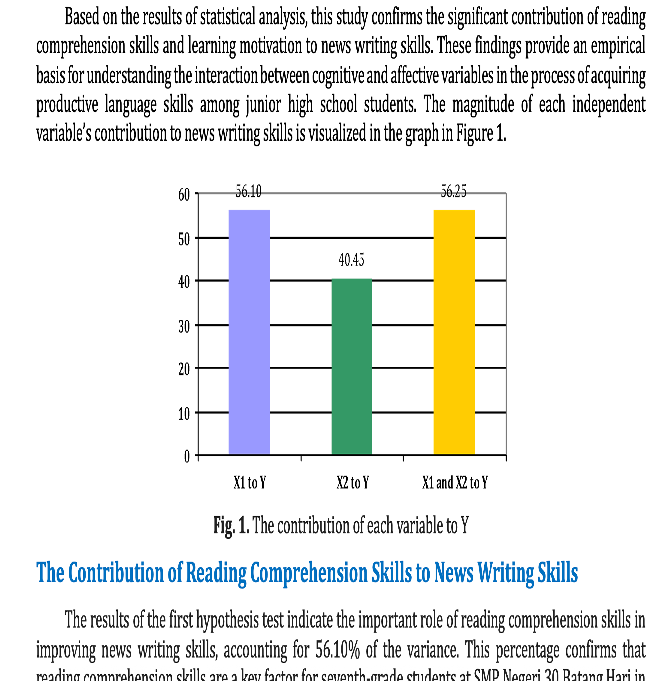
This study aims to describe and measure the extent to which reading comprehension skills and learning motivation contribute to news writing skills. This study employs a quantitative approach with a correlational design. The study population consisted of 136 seventh-grade students at SMP Negeri 30 Batang Hari, Jambi Province. A sample of 82 respondents was selected using proportionate random sampling. The data collection instruments consisted of an objective test to measure reading comprehension, a Likert scale questionnaire for learning motivation, and a performance test to assess news text writing skills. The data were statistically analyzed using the Pearson Product Moment correlation test, partial and multiple linear regression, the t-test, and the F-test. The results of the analysis confirmed the following three points. First, reading comprehension skills significantly contribute to news text writing skills by 56.10%. Second, learning motivation contributes significantly by 40.45%. Third, reading comprehension skills and learning motivation simultaneously contribute 56.25% to news text writing skills. Based on these research results, it is concluded that mastery of text comprehension and the level of learning motivation are key predictors of the quality of students’ news articles. Improving students’ ability to produce functional texts requires schools to integrate analytical reading exercises with the cultivation of a supportive learning environment in the classroom.
References
Afnita. (2022). Effectiveness of CTL-based electronic module development for writing learning. Tell-US, 8(1), 50–66. https://doi.org/10.22202/tus.2022.v8i1.5680
Aidin, B., & Ince, M. (2024). Can artificial intelligence write news: A research on determining the effect of artificial intelligence on news writing practice. Intermedia International E-Journal, 11(20), 24–41. https://doi.org/10.56133/intermedia.1436647
Aljuaid, H. (2024). The impact of artificial intelligence tools on academic writing instruction in higher education: A systematic review. Arab World English Journal (AWEJ), 4(1), 26–55. https://ssrn.com/abstract=4814342
Alzubi, A. A. F., & Nazim, M. (2024). Students’ intrinsic motivation in EFL academic writing: Topic-based interest in focus. Heliyon, 10(1), e24169. https://doi.org/10.1016/j.heliyon.2024.e24169
Amir, A., & Afnita, A. (2019). Analysis of reading comprehension skills reviewed from the literacy level of reading students in higher education. ICCLE 2019, 1–6. https://doi.org/10.4108/eai.19-7-2019.2289481
Andani, S. T., & Anggraini, D. (2023). Kemampuan menulis teks berita siswa kelas VIII SMP. PUSTAKA: Jurnal Bahasa dan Pendidikan, 3(2), 48–58. https://doi.org/10.56910/pustaka.v3i2.467
Ayu, G. N., Putri, C. A., Riyanto, A. R., & Koto, I. (2025). The scientific literacy competence of students in Indonesia and Mexico based on PISA 2022: An international comparative study. TOFEDU: The Future of Education Journal, 4(5), 1033–1038. https://doi.org/10.61445/tofedu.v4i5.525
Camacho, A., De Smedt, F., Maio, R., Cadima, J., Van Keer, H., & Alves, R. A. (2023). Writing motivation profiles and their association with writing performance: A person-centered approach. Topics in Language Disorders, 43(2), 169–186. https://doi.org/10.1097/TLD.0000000000000314
Casicas, M. T., & Quirap, E. A. (2023). Internal and external factors affecting reading performance in English and Filipino. International Journal of Research Publications (IJRP), 123(1), 118–129. https://doi.org/10.47119/IJRP1001231420234699
Erni, E., Azhar, F., & Vai, A. (2023). Developing local wisdom-based e-module in reading and writing course for tertiary students in Indonesia. Al-Ishlah: Jurnal Pendidikan, 15(2), 2577–2590. https://doi.org/10.35445/alishlah.v14i1.973
Fadila, L., Dalimunthe, S. A., & Siagian, N. (2024). Strategies to improve English reading comprehension. Fonologi: Jurnal Ilmuan Bahasa dan Sastra Inggris, 2(3), 16–25. https://doi.org/10.61132/fonologi.v2i2.774
Fatimah, Masduqi, H., & Subiyanto, A. (2026). How to integrate receptive and productive skills into reading instruction. International Research-Based Education Journal, 8(1), 1–16. https://journal-fip.um.ac.id/index.php/irbej/article/view/3509
Gea, E., Rukmanti, F., Mulianti, D., Manik, B., & Hulu, A. D. (2024). Strategi guru dalam mengembangkan kemampuan literasi siswa di sekolah dasar. Sinar Dunia: Jurnal Riset Sosial Humaniora dan Ilmu Pendidikan, 3(3), 56–62. https://doi.org/10.58192/sidu.v3i3.2413
Ghaluh, B. M., Afnita, & Wulandari, E. (2022). Analisis kebutuhan e-book interaktif berbasis kearifan lokal dalam pembelajaran teks eksposisi. GARUDA, 1(4), 526–536. https://garuda.kemdiktisaintek.go.id/documents/detail/3748487
Hendrastuti, M., & Rahmawati, F. P. (2023). Habituating of news text writing skills in elementary schools through the journalism extracurricular program. Profesi Pendidikan Dasar, 10(2), 143–158. https://doi.org/10.23917/ppd.v10i2.3405
Ifnaldi, Juanda, Afnita, Yunus, A. F., & Afandi, I. (2025). Integrating digital and hybrid learning models in environmental literature education: Enhancing speaking skills through virtual platforms in the digital era. Journal of Language Teaching and Research, 16(5), 1682–1693. https://doi.org/10.17507/jltr.1605.26
Illa, D. M., Astrid, A., & Husnaini. (2023). Difficulties in wriitng of the second-grade students at junior high schools in Palembang. Wiralodra English Journal, 7(2), 65–77. https://doi.org/10.31943/wej.v7i2.236
Karim, A. R. (2023). Improving students’ writing essay skill through problem-based learning approach in second grade high school of SMAN 5 Makasar. Jurnal Ilmiah Global Education, 4(2), 955–959. https://doi.org/10.55681/jige.v4i2.893
Kemendikbudristek BSKAP. (2022). Keputusan Kepala Badan Standar, Kurikulum, dan Asesmen Pendidikan, Kementerian Pendidikan, Kebudayaan, Riset, dan Teknologi Nomor 008/H/KR/2022 Tentang Capaian Pembelajaran pada Pendidikan Anak Usia Dini, Jenjang Pendidikan Dasar, dan Jenjang Pendidikan M. Kemendikbudristek BSKAP RI (Issue 021, pp. 1–384). https://kurikulum.kemendikdasmen.go.id/file/1733796633_manage_file.pdf
Kim, Y. G., Wolters, A., & Lee, J. won. (2024). Reading and writing relations are not uniform: They differ by the linguistic grain size, developmental phase, and measurement. Review of Educational Research, 94(3), 311–342. https://doi.org/10.3102/00346543231178830
Lestyarini, B. (2019). Pendalaman materi bahasa Indonesia modul 6 genre teks dalam bahasa Indonesia. Kemdikbud. https://repository.bbg.ac.id/handle/1099
Metekohy, L. M., Daliman, M., Metekohy, B., & Ming, D. (2022). The impact of teaching and learning quality process to school and university education for sustainable future. JPPI (Jurnal Penelitian Pendidikan Indonesia), 8(1), 143–151. https://doi.org/10.29210/020221203
Munawwaroh, I. F., & Rokhmansyah, A. (2025). Implementation of cooperative learning techniques to improve news text mastery in seventh grade junior high school students. Jurnal Ilmu Manajemen dan Pendidikan, 5(2), 221–230. https://doi.org/10.30872/impian.v5i2.5906
Munir, E., & Yavuz, M. (2024). Study of pragmatic analysis of literature on the development of ELT students’ receptive and productive skills: A case of North Cyprus. Heliyon, 10(21), e39558. https://doi.org/10.1016/j.heliyon.2024.e39558
Novelti, Erpidawati, & Putri, R. (2022). The effectiveness of CTL on the students’ news writing skill. AMCA: Journal of Education and Behavioral Change, 2(2), 79–83. https://doi.org/10.51773/ajeb.v2i2.121
Noveria, E., Ulya, R. H., Sukma, R., & Tressyalina. (2026). Integrating project-based learning with authentic news video production: A qualitative case study on news text literacy development in Indonesia’s Merdeka Curriculum. Bahastra: Jurnal Pendidikan Bahasa dan Sastra Indonesia, 46(1), 81–91. https://doi.org/10.26555/bs.v46i1.2036
Nurrahmah, F., Syahrul, R., Tressyalina, & Afnita. (2025). Model pembelajaran PECARA (Peta cerita rakyat) berbasis literasi digital dan budaya untuk meningkatkan minat baca siswa. JRIP: Jurnal Riset dan Inovasi Pembelajaran, 5(2), 806–819. https://doi.org/10.51574/jrip.v5i2.3142
OECD. (2023). PISA 2022 Results (Volume I). https://www.oecd.org/en/publications/pisa-2022-results-volume-i_53f23881-en.html
Pane, W. S., & Sanchez, A. O. (2023). The problem faced by freshmen students of English education department in writing English paragraph. Borneo Educational Journal (Borju), 5(1), 97–105. https://doi.org/10.24903/bej.v5i1.1221
Permendikbudristek Nomor 16 Tahun 2022 Tentang Standar Proses Pada Pendidikan Anak Usia Dini, Jenjang Pendidikan Dasar, dan Jenjang Pendidikan Menengah (2022). https://peraturan.bpk.go.id/Details/224238/permendikbudriset-no-16-tahun-2022
Pinilih, M. S., & Sukarno. (2024). Challenges in implementing the information gap technique to enhance the Indonesian EFL students’ speaking skills. Indonesian Journal of EFL and Linguistics, 9(2), 287–304. https://doi.org/10.21462/ijefl.v9i2.804
Putrawangsa, S., & Hasanah, U. (2022). Analisis capaian siswa Indonesia pada PISA dan urgensi kurikulum berorientasi literasi dan numerasi. Edupedika, 1(1), 1–12. https://doi.org/10.60004/edupedika.v1i1.1
Rafianti, R. (2025). Literature study: The SQ4R method in improving reading comprehension in students. Journal of Pedagogical Content Knowledge, 1(2), 44–52. https://doi.org/10.23960/jpck
Repelita, F., Kembaren, W., Athirah, N., & Arini, T. (2024). The analyzing difficulties faced by students’ English department in writing English scientific article research. INNOVATIVE: Journal of Social Science Research, 4(3), 7542–7559. https://j-innovative.org/index.php/Innovative/article/view/7584
Rizki, B. N. T., & Aprianti, B. I. (2024). Exploring reading comprehension strategies: Insights from recent studies. Journal of Educational Studies, 2(2), 98–106. https://doi.org/10.58218/jes.v2i2.1142
Simarmata, E. N. S., Gusar, M. R. S., & S, M. F. (2025). Pengaruh penggunaan media aplikasi perplexity berbasis AI terhadap keterampilan menulis teks berita siswa di kelas VII SMP. Edu Cendikia: Jurnal Ilmiah Kependidikan, 5(2), 753–762. https://doi.org/10.47709/educendikia.v5i02.6996
Siswanto, D. H., Wahyuni, N., & Setiawan, A. (2024). Enhancement of students’ writing skills through training in scientific article writing. Indonesian Journal of Society Development (IJSD), 3(2), 63–74. https://doi.org/10.55927/ijsd.v3i2.8044
Solanki, A., & Patoliya, V. (2024). Exploring the role of reading in the development of writing abilities. ShodhKosh: Journal of Visual and Performing Arts, 5(7), 1196–1205. https://doi.org/10.29121/shodhkosh.v5.i7.2024.5063
Soto, C., Antonio P. Gutierrez de Blume, V. R., Rodríguez, F., Palma, D., & Gutiérrez, F. (2023). Metacognitive monitoring skills of reading comprehension and writing between proficient and poor readers. Metacognition Learning, 18(4), 113–134. https://doi.org/10.1007/s11409-022-09317-8
Strong, J. Z. (2023). Investigating the effects and social validity of an informational text structure intervention for reading and writing in grades four and five. Reading Psychology, 44(7), 820–852. https://doi.org/10.1080/02702711.2023.2202172
Susanti, E., Hikmat, A., & Tarmini, W. (2025). Needs analysis fo the development of web-based teaching materials in scientific writing skills instruction for eleventh-grade vocational high school students. Bahastra: Jurnal Pendidikan Bahasa dan Sastra Indonesia, 45(2), 222–231. https://doi.org/10.26555/bs.v46i1.2036
Syifa, Q. A., Al-baekani, A. K., & Srisudarso, M. (2022). Junior high school students’ difficulties in writing descriptive text. JIIP (Jurnal Ilmiah Ilmu Pendidikan), 5(10), 4470–4474. https://doi.org/10.54371/jiip.v5i10.1044
UNESCO. (2024). UNESCO’s innovative tools for media and information literacy. https://www.unesco.org/en/articles/unescos-innovative-tools-media-and-information-literacy
Widiana, S. W., Novitasari, W., & Mubin, N. (2025). Analisis hambatan kognitif siswa dalam membangun makna dari teks bacaan. Jurnal Pendidikan Agama Islam Al-Amin, 2(2), 212–218. https://doi.org/10.54723/jpai.v2i2.484
Wirahyuni, K., & Martha, I. N. (2022). the effectiveness of using the Tribunnews instagram account in developing news text writing. EDUCATIONIST: Journal of Educational and Cultural Studies, 1(2), 85–91. https://jurnal.litnuspublisher.com/index.php/jecs/article/view/19
Wismanto, A., Arifin, Z., & Fatimah, S. (2022). the students’ news writing difficulties based on cognitive process. ETERNAL (English Teaching Journal), 13(2), 167–173. https://doi.org/10.26877/eternal.v13i2.12141
Yao, X., Shao, Y., & Luo, R. (2024). The effectiveness of using an H5P pathway to enhance college students’ academic style in writing. European Journal of Teaching and Education, 6(1), 35–56. https://doi.org/10.33422/ejte.v6i1.1221
Zhang, X., Wei, Q., Zheng, B., Liu, J., & Zhang, P. (2024). FrameSum: Leveraging framing theory and deep learning for enhanced news text summarization. Applied Sciences, 14, 1–30. https://doi.org/10.3390/app14177548
Zuhri, S. A. N. A., Susanto, & Sukarsono. (2024). The correlation among learning styles, learning motivation, and writing performance of undergraduate EFL learners. International Conference on Islam, Law, and Society (INCOILS), 4(1), 1–8. https://doi.org/10.70062/incoils.v4i1.254
Additional Files
Published
Issue
Section
License
Copyright (c) 2026 Dina Adila, Afnita Afnita, Syahrul Ramadhan , Amril Amir

This work is licensed under a Creative Commons Attribution-ShareAlike 4.0 International License.
1.jpg)