Gamified digital media: Innovative media for strengthening first grade elementary students' writing literacy
DOI:
https://doi.org/10.26555/bs.v46i2.2068Keywords:
Digital Media, Elementary School , Gamification, Innovative Media , Writing LiteracyAbstract
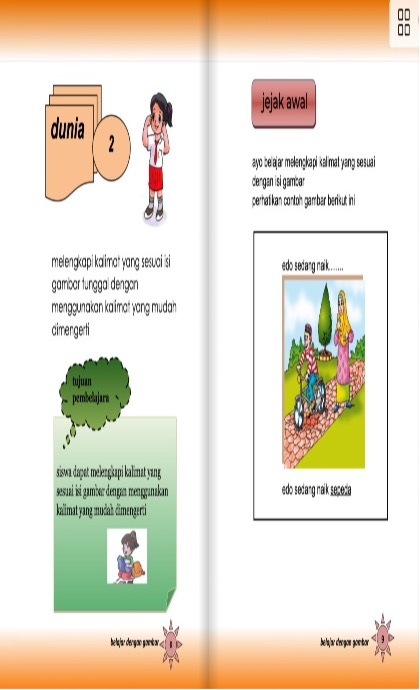
This study aimed to develop gamification-based digital media as an innovative learning tool to strengthen the writing literacy of first-grade elementary school students. The research used a Research and Development (R&D) method with the ADDIE model. Data were collected through expert validation questionnaires, teacher and student evaluation questionnaires, and writing skills tests. The results showed that the developed media had a high feasibility level, with material expert validation scores of 81.7 (very feasible) and media expert scores of 80.2 (feasible). User evaluations also showed very positive responses, with average scores of 82.0 from teachers and 82.75 from students. The effectiveness test results indicated that students who learned using gamification-based digital media had an average writing literacy ability of 85.71, higher than the conventional learning group at 77.50, with a statistically significant difference (t = 3.867; p < 0.001). This finding shows that integrating gamification elements can boost student engagement while also supporting the development of early writing skills through a more interactive, gradual, and motivating learning experience. This study offers theoretical contributions to the development of gamification-based literacy learning, pedagogical contributions as an alternative, more innovative writing teaching strategy, and practical contributions by providing effective digital media to support the enhancement of elementary students' writing literacy.
References
Arianti, F. F., Sutrimah, S., & Hasanudin, C. (2021). Flipped classroom dan aplikasi schoology: Analisis keterampilan menulis teks biografi. Tabasa: Jurnal Bahasa, Sastra Indonesia, dan Pengajarannya, 1(2), 165–186. https://doi.org/10.22515/tabasa.v1i2.2591
Arrimada, M., Torrance, M., & Fidalgo, R. (2022). Response to Intervention in first‑grade writing instruction: A large‑scale feasibility study. Reading and Writing, 35(4), 943–969. https://doi.org/10.1007/s11145-021-10211-z
Cattoni, A., Anderle, F., Venuti, P., & Pasqualotto, A. (2024). How to improve reading and writing skills in primary schools : A comparison between gamification and pen-and-paper training. International Journal of Child-Computer Interaction, 39(1), 1–13. https://doi.org/10.1016/j.ijcci.2024.100633
Debaryshe, B. D. (2023). Supporting emergent writing in preschool classrooms: Results of a professional development program. Educ. Sci, 13, 1–18. https://doi.org/10.3390/educsci13090961
Fahira, W., & Iswara, P. D. (2023). Analysis of students difficulties in early writing learning at the elementary school level. Lembaran Ilmu Kependidikan, 52(2), 97–109.
Gil, M. M., Cunha, A. J., Pereira, I. S. P., & Sylla, C. M. (2025). The use of digital tools to enhance writing in primary school through hybrid practices: A multisite qualitative study. Journal of Education, 0(0), 1–14.
Hanifa, M., Syam, S. S., Guru, P., Dasar, S., & Padang, U. N. (2025). Analisis kemampuan menulis permulaan siswa kelas 1 sekolah dasar. Morfologi: Jurnal Ilmu Pendidikan, Bahasa, Sastra, dan Budaya, 3(3), 65–74. https://doi.org/10.61132/morfologi.v3i3.1620
Ibrahim, F., Hendrawan, B., & Sunanih, S. (2023). Pengembangan media pembelajaran PACAS untuk meningkatkan hasil belajar siswa. JLEB: Journal of Law, Education, and Business, 1(2), 102–108. https://doi.org/10.57235/jleb.v1i2.1192
Inggriyani, F., & Pebrianti, N. A. (2021). Analisis Kesulitan keterampilan menulis karangan deskripsi peserta didik di sekolah dasar. Didaktik : Jurnal Ilmiah PGSD STKIP Subang, 7(01), 1–22. https://doi.org/10.36989/didaktik.v7i01.175
Jayanti, W. M. M., Firdaus, M. Y., & Arochman, T. (2024). The effectiveness of integrating classcraft: A gamified learning platform on enhancing writing skills among elementary school learners. English Learning Innovation, 5(2), 277–286. https://doi.org/10.22219/englie.v5i2.35022
Kabel, K., Bremholm, J., & Bundsgaard, J. (2022). A framework for identifying early writing development. writing & pedagogy, 13(1), 51–88. https://doi.org/10.1558/wap.21467
Kadek, N., Putri, S., & Ganing, N. N. (2024). Dampak model project based learning berbasis literasi terhadap keterampilan menulis dalam pembelajaran Bahasa Indonesia sekolah dasar. Indonesian Journal of Instruction, 5(2), 160–170. https://doi.org/10.23887/iji.v5i2.78069
Kim, Y.-S. G., Yang, D., Reyes, M., & Connor, C. (2021). Writing instruction improves students’ writing skills differentially depending on focal instruction and children: A meta-analysis for primary grade students. Educational Research Review, 34, 1–16. https://doi.org/10.1016/j.edurev.2021.100408
Maisarah, M., Lestari, T. A., & Sakulpimolrat, S. (2022). Urgensi pengembangan media berbasis digital pada pembelajaran Bahasa Indonesia. EUNOIA (Jurnal Pendidikan Bahasa Indonesia), 2(1), 65. https://doi.org/10.30821/eunoia.v2i1.1348
Majorano, M., Bastianello, T., & Bodea, C. (2021). Early literacy skills and later reading and writing performance across countries: The Effects of orthographic consistency and preschool curriculum. Child & Youth Care Forum, 50(6), 1063–1085. https://doi.org/10.1007/s10566-021-09611-7
Martin, C., & Dockrell, J. E. (2024). Writing productivity development in elementary school: A systematic review. Assessing Writing, 60(March), 1–16. https://doi.org/10.1016/j.asw.2024.100834
Martzog, P., & Suggate, S. P. (2022). Screen media are associated with fine motor skill development in preschool children. Early Childhood Research Quarterly, 60, 363–373. https://doi.org/10.1016/j.ecresq.2022.03.010
Mathew, K. A., Lee, V. J., Gentile, C., Hanna, C., & Montgomery, A. (2025). Empowering young writers: A multimodal case study of emergent writing in urban preschool classrooms. Early Childhood Education Journal, 53(6), 2039–2052. https://doi.org/10.1007/s10643-024-01831-5
Maula, I. K., & Antara, P. A. (2024). Buku interaktif digital media inovatif untuk meningkatkan literasi baca tulis kelas i sekolah dasar. Jurnal Penelitian dan Pengembangan Sains dan Humaniora, 8(2), 252–260. https://doi.org/10.23887/jppsh.v8i2.77962
Mulyatiningsih, E. (2019). Metode penelitian terapan bidang pendidikan. Alfabeta.
Nurazizah, S. A., & Darmayanti, M. (2024). Keterampilan menulis siswa sekolah dasar: Systematic literature review dan bibliometric analysis. Aksara, 36(2), 337–359. https://aksara.kemendikdasmen.go.id/index.php/aksara/article/view/4236
Pratiwi, C. P., & Alfiati. (2023). Contribution of digital books to online learning in lecturers and student perceptions. Premiere Educandum: Jurnal Pendidikan Dasar dan Pembelajaran, 13(1), 49–61. https://doi.org/10.25273/pe.v13i1.14934
Pratiwi, C. P., Irma, C. N., & Ivanka, A. B. (2024). Developing flipbooks and wordwall-assisted digital media for teaching procedural writing in elementary schools. EDUKASIA: Jurnal Pendidikan dan Pembelajaran, 5(2), 279–294. https://doi.org/10.62775/edukasia.v5i2.1394
Rahayu, R., Iskandar, S., & Abidin, Y. (2022). Inovasi pembelajaran abad 21 dan penerapannya di Indonesia. Jurnal Basicedu, 6(2), 2099–2104. https://doi.org/10.31004/basicedu.v6i2.2082
Ratnasari, D., & Ansori, I. (2024). Media smart apps creator berbasis problem based learning meningkatkan kemampuan menulis kalimat efektif. Jurnal Penelitian dan Pengembangan Pendidikan, 8(1), 10–21. https://doi.org/10.23887/jppp.v8i1.68614
Razanah, M., & Solihati, N. (2022). Pentingnya pembelajaran menulis puisi di sekolah di era society 5.0. Jurnal Literasi, 6(2), 244–250. https://doi.org/10.25157/literasi.v6i2.7681
Saifuddin, M. F., & Putra, L. D. (2024). Digital literacy in elementary school: A systematic literature review. Gagasan Pendidikan Indonesia, 5(2), 86–99. https://jurnal.untirta.ac.id/index.php/GAGASAN/article/view/24830
Sapkota, S., & Gnawali, L. (2025). Effective writing instruction for students in elementary level who find writing challenging: evidence-based practices. The Harvest, 4(1), 75–84. https://doi.org/10.3126/harvest.v4i1.75357
Saputra, M. D., Jampel, I. N., & Wibawa, I. M. C. (2024). Literacy learning reading writing in elementary schools. International Journal of Language and Literature, 8(4), 172–182. https://doi.org/10.23887/ijll.v8i4.93956
Sari, P., Yani, A., & Mukhaira, S. (2024). Improving writing skills in early children. International Conference on Islamic Education and Islamic Business ( ICoBEI ) Islamic Studies Faculty Universitas Islam Riau, 1(1), 387–392.
Segura, J. E. C., Gruezo, C. del R. H., Sánchez, J. del C. P., & Rangel, D. R. (2025). Gamified activities around language and literature for elementary schoolstudents. Ciencia Digital, 9(4), 206–225. https://doi.org/10.33262/cienciadigital.v9i4.3563
Shafiee, H., & Alipour, R. (2024). Unlocking writing success: Building assessment literacy for students and teachers through effective interventions. Assessing Writing, 59(December 2023), 1–26. https://doi.org/10.1016/j.asw.2023.100804
Shimizu, A. Y., & Santos, J. (2025). Supporting online learning for diverse elementary students : A community of inquiry approach to collaborative multimodal composing—processes, products, and perspectives. Computers and Composition, 78(1), 1–20. https://doi.org/10.1016/j.compcom.2025.102959
Su, M., Fan, Y., Wu, J., & Qiao, B. (2022). The influence of the literacy environment on children’s writing development in Chinese. Front. Psychol, 13(October), 1–12. https://doi.org/10.3389/fpsyg.2022.1010471
Suryadi, E., Milawasri, & Lustina. (2022). Pengaruh model pembelajaran berbasis masalah terhadap kemampuan menulis teks prosedur siswa. Jurnal Bindo Sastra, 6(1), 15–26. https://doi.org/10.32502/jbs.v6i1.3503
Syukri, R. A., Raldiastari, S., & Arif, T. A. (2025). Development of concrete media in reading and writing lit- eracy of grade 1 elementary school students in region III , Batalaiworu District. International Journal of Education and Literature, 4(2), 107–109. https://doi.org/10.55606/ijel.v4i2.239
Truxius, L., Wyss, J. S., & Maurer, M. N. (2025). Early handwriting development: A longitudinal perspective on handwriting time, legibility, and spelling. Front. Psychol, 15(1), 1–7. https://doi.org/10.3389/fpsyg.2024.1466061
Tyson, L. S. (2024). Learning to read and write is to defend yourself ’: Exploring indigenous perspectives and reimagining literacies for self-determination in Mexico. International Journal of Educational Development, 106(1), 1–10. https://doi.org/10.1016/j.ijedudev.2024.102992
Utami, S., & Purwanta, E. (2025). Improving early writing skills through play-based learning with loose parts: A classroom action research with children with learning difficulties. Journal of Innovation and Research In Primary Education, 4(4), 3800–3809. https://doi.org/10.56916/jirpe.v4i4.2503
Venturaa, A. C., Scheuera, N., & Pozo, J. I. (2020). Elementary school children’s conceptions of teaching and learning to write as intentional activities. Learning and Instruction, 65(2), 1–10. https://doi.org/10.1016/j.learninstruc.2019.101249
Yarmi, G. (2025). Developing a writing instruction model for primary schools based on ISM-DEMATEL to enhance students’ literacy competence: An empirical evidence in Indonesia. Social Sciences & Humanities Open, 12(September), 1–13. https://doi.org/10.1016/j.ssaho.2025.101963
Additional Files
Published
Issue
Section
License
Copyright (c) 2026 Cerianing Putri Pratiwi, Heny Kusuma Widyaningrum, Nico Irawan

This work is licensed under a Creative Commons Attribution-ShareAlike 4.0 International License.
1.jpg)