Eco-digital Indonesian language in elementary education: Ecological interest and technological perception
DOI:
https://doi.org/10.26555/bs.v46i2.1903Keywords:
Digital Learning Module , Ecological Interest , Ecological Literacy , Technological PerceptionAbstract
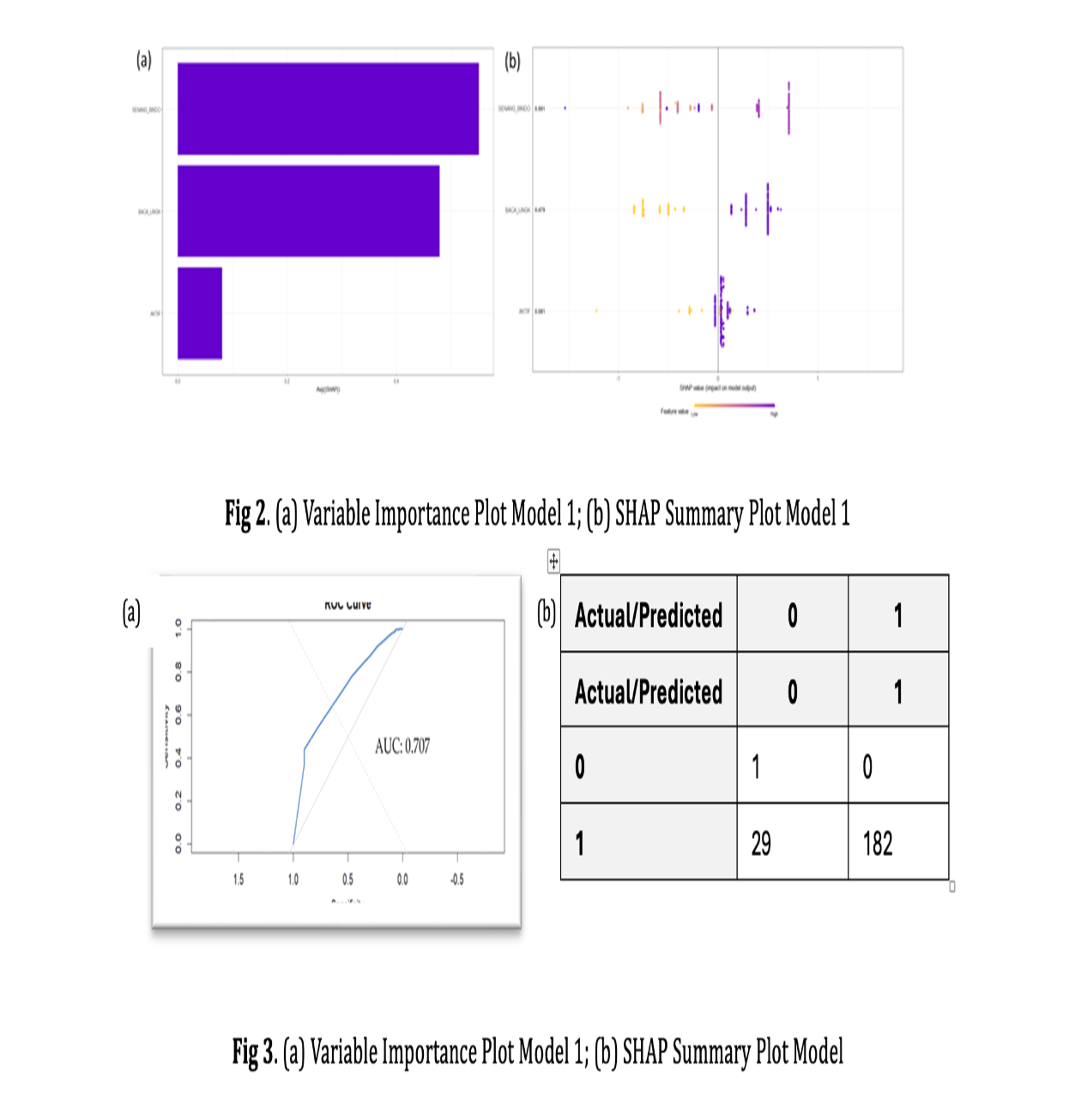
A This study examines the relationship between ecological interest and technological perception in shaping elementary students’ support toward ecology-based digital Indonesian language modules. The research employed a quantitative cross-sectional survey involving 212 fifth- and sixth-grade students from an elementary school in Depok, Indonesia. Data were collected through a questionnaire developed based on the Technology Acceptance Model (TAM), focusing on ecological interest, technological perception, and students’ support toward eco-digital learning modules. The findings indicate that most students demonstrated positive responses toward the integration of ecological themes into Indonesian language learning. Ecological interest emerged as the strongest factor associated with students’ support, followed by technological perception and prior digital learning experience. Students with stronger ecological awareness and more positive perceptions of learning technology generally showed higher acceptance of eco-digital modules. However, several students still preferred contextual and experiential environmental learning activities alongside technology-based instruction. Overall, the study highlights the importance of integrating ecological literacy and accessible digital learning design in developing sustainability-oriented Indonesian language learning for elementary education.
References
Alderson, P., & Morrow, V. (2020). The ethics of research with children and young people: A practical handbook (2nd ed.). SAGE Publications. https://doi.org/10.4135/9781529682694
American Educational Research Association. (2011). Code of ethics. American Educational Research Association.
Ardoin, N. M., Bowers, A. W., & Gaillard, E. (2020). Environmental education outcomes for conservation: A systematic review. Biological Conservation, 241, 108224. https://doi.org/10.1016/j.biocon.2019.108224
Baker, R. S., & Inventado, P. S. (2021). Educational data mining and learning analytics. In R. K. Sawyer (Ed.), The Cambridge handbook of the learning sciences (3rd ed., pp. 853–871). Cambridge University Press.
Boateng, G. O., Neilands, T. B., Frongillo, E. A., Melgar-Quiñonez, H. R., & Young, S. L. (2018). Best practices for developing and validating scales for health, social, and behavioral research: A primer. Frontiers in Public Health, 6, 149. https://doi.org/10.3389/fpubh.2018.00149
Bond, M., Bedenlier, S., Marín, V. I., & Händel, M. (2021). Emergency remote teaching in higher education: Mapping the first global online semester. International Journal of Educational Technology in Higher Education, 18(1), 1–24. https://doi.org/10.1186/s41239-021-00282-x
British Educational Research Association. (2018). Ethical guidelines for educational research (4th ed.). British Educational Research Association.
Campbell, S., Greenwood, M., Prior, S., Shearer, T., Walkem, K., Young, S., Bywaters, D., & Walker, K. (2020). Purposive sampling: Complex or simple? Research case examples. Journal of Research in Nursing, 25(8), 652–661. https://doi.org/10.1177/1744987120927206
Chen, T., & Guestrin, C. (2016). XGBoost: A scalable tree boosting system. Proceedings of the 22nd ACM SIGKDD International Conference on Knowledge Discovery and Data Mining, 785–794. https://doi.org/10.1145/2939672.2939785
Chicco, D., & Jurman, G. (2020). The advantages of the Matthews correlation coefficient (MCC) over F1 score and accuracy in binary classification evaluation. BMC Genomics, 21(1), 6. https://doi.org/10.1186/s12864-019-6413-7
Chiu, T. K. F. (2022). Applying the self-determination theory to explain student engagement in online learning. Sustainability, 14(3), 1195. https://doi.org/10.3390/su14031195
Cohen, L., Manion, L., & Morrison, K. (2018). Research methods in education (8th ed.). Routledge. https://doi.org/10.4324/9781315456539
Creswell, J. W., & Creswell, J. D. (2018). Research design: Qualitative, quantitative, and mixed methods approaches (5th ed.). Sage Publications.
Davis, F. D. (1989). Perceived usefulness, perceived ease of use, and user acceptance of information technology. MIS Quarterly, 13(3), 319–340. https://doi.org/10.2307/249008
DeVellis, R. F., & Thorpe, C. T. (2021). Scale development: Theory and applications (5th ed.). SAGE Publications.
Falloon, G. (2020). From digital literacy to digital competence: The teacher digital competency framework. Educational Technology Research and Development, 68(5), 2449–2472. https://doi.org/10.1007/s11423-020-09767-4
Field, A. (2018). Discovering statistics using IBM SPSS Statistics (5th ed.). Sage Publications.
Fraenkel, J. R., Wallen, N. E., & Hyun, H. H. (2019). How to design and evaluate research in education (10th ed.). McGraw-Hill Education.
Géron, A. (2022). Hands-on machine learning with Scikit-Learn, Keras, and TensorFlow (3rd ed.). O’Reilly Media.
Granić, A., & Marangunić, N. (2019). Technology acceptance model in educational context: A systematic literature review. British Journal of Educational Technology, 50(5), 2572–2593. https://doi.org/10.1111/bjet.12864
Hair, J. F., Black, W. C., Babin, B. J., & Anderson, R. E. (2021). Multivariate data analysis (8th ed.). Cengage.
Haleem, A., Javaid, M., Qadri, M. A., & Suman, R. (2022). Understanding the role of digital technologies in education: A review. Sustainable Operations and Computers, 3, 275–285. https://doi.org/10.1016/j.susoc.2022.05.004
Holmes, W., Bialik, M., & Fadel, C. (2019). Artificial intelligence in education: Promises and implications for teaching and learning. Center for Curriculum Redesign.
Howard, S. K., Tondeur, J., Siddiq, F., & Scherer, R. (2021). Ready, set, go! Profiling teachers’ readiness for online teaching. Technology, Pedagogy and Education, 30(1), 141–158. https://doi.org/10.1080/1475939X.2020.1839543
Israel, M., & Hay, I. (2021). Research ethics for social scientists (3rd ed.). SAGE Publications.
Khan, A., & Ghosh, S. K. (2021). Student performance analysis and prediction in classroom learning: A review of educational data mining studies. Education and Information Technologies, 26(1), 205-240. https://doi.org/10.1007/s10639-020-10230-3
Khosravi, H., Shum, S. B., Chen, G., Conati, C., Tsai, Y. S., Kay, J., Knight, S., Martinez-Maldonado, R., Sadiq, S., & Gašević, D. (2022). Explainable artificial intelligence in education. Computers and Education: Artificial Intelligence, 3, 100074. https://doi.org/10.1016/j.caeai.2022.100074
Kopnina, H. (2020). Education for the future? Critical evaluation of education for sustainable development goals. The Journal of Environmental Education, 51(4), 280–291. https://doi.org/10.1080/00958964.2019.1710444
Lundberg, S. M., & Lee, S.-I. (2017). A unified approach to interpreting model predictions. Advances in Neural Information Processing Systems, 30, 4765–4774.
Lundberg, S. M., Erion, G., Chen, H., DeGrave, A., Prutkin, J. M., Nair, B., Katz, R., Himmelfarb, J., Bansal, N., & Lee, S.-I. (2020). From local explanations to global understanding with explainable AI for trees. Nature Machine Intelligence, 2(1), 56–67. https://doi.org/10.1038/s42256-019-0138-9
Misiaszek, G. W. (2020). Ecopedagogy and citizenship in the age of environmental crises. Educational Philosophy and Theory, 52(6), 645–656. https://doi.org/10.1080/00131857.2019.1667539
Molnar, C. (2022). Interpretable machine learning. Springer. https://doi.org/10.1007/978-3-031-63797-7
Ng, D. T. K., Leung, J. K. L., Chu, S. K. W., & Qiao, M. S. (2021). Conceptualizing AI literacy. Computers and Education: Artificial Intelligence, 2, 100041. https://doi.org/10.1016/j.caeai.2021.100041
Powers, D. M. W. (2020). Evaluation: From precision, recall and F-measure to ROC, informedness, markedness and correlation. Journal of Machine Learning Technologies, 2(1), 37–63.
Presser, S., Couper, M. P., Lessler, J. T., Martin, E., Martin, J., Rothgeb, J. M., & Singer, E. (2004). Methods for testing and evaluating survey questions. Public Opinion Quarterly, 68(1), 109–130. https://doi.org/10.1093/poq/nfh008
Prokhorenkova, L., Gusev, G., Vorobev, A., Dorogush, A. V., & Gulin, A. (2018). CatBoost: Unbiased boosting with categorical features. Advances in Neural Information Processing Systems, 31, 6638–6648.
Rasheed, R. A., Kamsin, A., & Abdullah, N. A. (2020). Challenges in the online component of blended learning. Computers & Education, 144, 103701. https://doi.org/10.1016/j.compedu.2019.103701
Redecker, C. (2020). European framework for the digital competence of educators (DigCompEdu). Publications Office of the European Union.
Resnik, D. B. (2020). What is ethics in research & why is it important? National Institute of Environmental Health Sciences.
Saito, T., & Rehmsmeier, M. (2015). The precision-recall plot is more informative than the ROC plot when evaluating binary classifiers on imbalanced datasets. PLOS ONE, 10(3), e0118432. https://doi.org/10.1371/journal.pone.0118432
Siemens, G., & Baker, R. S. (2022). Learning analytics and educational data mining: Towards communication and collaboration. Proceedings of the International Conference on Learning Analytics and Knowledge, 252–254. https://doi.org/10.1145/2330601.2330661
Siemens, G., & Long, P. (2011). Penetrating the fog: Analytics in learning and education. EDUCAUSE Review, 46(5), 30–40.
Sterling, S. (2021). Education for sustainability: A paradigm shift. Routledge.
Stevenson, R. B., Brody, M., Dillon, J., & Wals, A. E. J. (2021). International handbook of environmental education. Routledge.
Taber, K. S. (2018). The use of Cronbach's alpha when developing and reporting research instruments in science education. Research in Science Education, 48(6), 1273–1296. https://doi.org/10.1007/s11165-016-9602-2
Taherdoost, H. (2018). Validity and reliability of the research instrument: How to test the validation of a questionnaire/survey in a research. International Journal of Academic Research in Management, 5(3), 28–36.
Tang, K. Y., Chang, C. Y., & Hwang, G. J. (2021). Trends in artificial intelligence-supported e-learning: A systematic review and co-citation network analysis. Interactive Learning Environments, 31(4), 2134–2152. https://doi.org/10.1080/10494820.2021.1875001
UNESCO. (2021). Education for sustainable development: A roadmap. UNESCO Publishing.
van Laar, E., van Deursen, A. J. A. M., van Dijk, J. A. G. M., & de Haan, J. (2020). Determinants of 21st-century digital skills. Computers in Human Behavior, 72, 577–588. https://doi.org/10.1016/j.chb.2017.03.017
Viberg, O., Hatakka, M., Bälter, O., & Mavroudi, A. (2023). The current landscape of learning analytics in higher education. Computers in Human Behavior Reports, 9, 100242. https://doi.org/10.1016/j.chbr.2022.100242
Viberg, O., Mutimukwe, C., Hrastinski, S., Cerratto‐Pargman, T., & Lilliesköld, J. (2024). Exploring teachers'(future) digital assessment practices in higher education: Instrument and model development. British Journal of Educational Technology, 55(6), 2597-2616. https://doi.org/10.1111/bjet.13462
Wang, Y., Li, X., & Fu, H. (2021). Explainable artificial intelligence in educational analytics: A systematic review. Computers and Education: Artificial Intelligence, 2, 100027. https://doi.org/10.1016/j.caeai.2021.100027
Zawacki-Richter, O., Marín, V. I., Bond, M., & Gouverneur, F. (2019). Systematic review of research on artificial intelligence applications in higher education – where are the educators? International Journal of Educational Technology in Higher Education, 16(1), 39. https://doi.org/10.1186/s41239-019-0171-0
Additional Files
Published
Issue
Section
License
Copyright (c) 2026 mudzakkir mudzakkir harun alrasyid

This work is licensed under a Creative Commons Attribution-ShareAlike 4.0 International License.
1.jpg)