Algorithmic folklore and cultural memory in Indonesia YouTube animated folk stories
DOI:
https://doi.org/10.26555/bs.v46i3.2265Keywords:
Algorithmic culture, Cultural Memory, Digital Folklore, Indonesian Folk Tales, Youtube AnimationAbstract
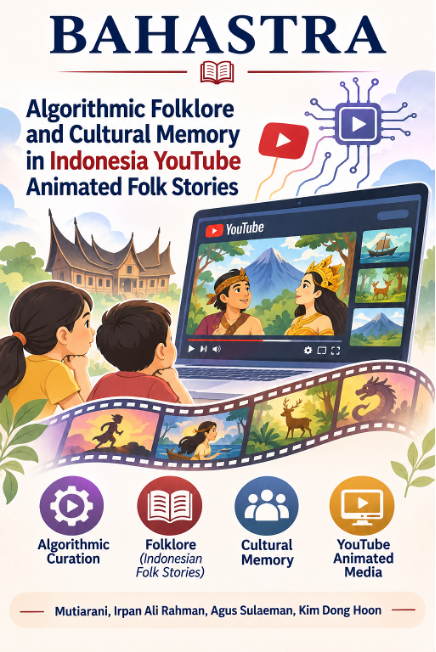
This study examines the transformation of Indonesian folk tales into digital animation on YouTube as a cultural ecosystem shaped by narrative adaptation, cultural memory, and algorithmic logic. Although recent studies have addressed digital folklore, animation, cultural memory, and platform-based cultural production, these domains are often examined separately. This study therefore analyzes animated folk tales simultaneously as narrative adaptations, cultural memory texts, and algorithmically mediated content. Using a qualitative digital cultural text analysis design, the study focuses on two YouTube channels, Dongeng Kita and Gromore Studio Series. Data were analyzed through narrative, symbolic, and digital media ecology analysis by examining story structure, characters, cultural symbols, metadata, thumbnails, audience engagement, and distribution strategies. The findings show that Dongeng Kita represents a pedagogical adaptation model characterized by linear plots, simplified conflicts, explicit moral resolutions, and an orientation toward children and family audiences. In contrast, Gromore Studio Series employs a cinematic-visual model through 3D animation, mythological atmosphere, localized cultural symbols, and stronger visual dramatization. More importantly, YouTube functions not merely as a medium for preserving folklore but as a cultural infrastructure that reshapes cultural memory through audiovisual adaptation and algorithmic visibility. Thematic consistency, keyword use, compilation formats, thumbnail design, and audience engagement are associated with observable patterns of platform visibility and circulation Thus, Indonesian folk tales are selectively remediated and recirculated according to creative and platform logics. In Indonesian language and literature education, these adaptations can support literary appreciation, cultural literacy, multimodal literacy, and critical understanding of digital narrative transformation among contemporary student audiences.
References
Ansoriyah, S., Sarifah, I., Oktaviani, R., & Muawanah, U. (2026). Contextual learning for sustainable education using digital folktale materials. Discover Sustainability, 7, 659. https://doi.org/10.1007/s43621-026-02956-w
Assmann, J. (2011). Cultural memory and early civilization: Writing, remembrance, and political imagination. Cambridge University Press. https://doi.org/10.1017/CBO9780511996306
Audrin, C., & Audrin, B. (2022). Key factors in digital literacy in learning and education: A systematic literature review using text mining. Education and Information Technologies, 27, 7395–7419. https://doi.org/10.1007/s10639-021-10832-5
Azim, F., Farida, F., Effendi, N., Hayati, Z., Herlandy, P. B., & Hamdani, F. (2024). Pengembangan video cerita rakyat “Legenda Danau Raja” berbasis animasi 2 dimensi dengan teknik bilingual. Jurnal Obsesi: Jurnal Pendidikan Anak Usia Dini, 8(6), 1798–1810. https://doi.org/10.31004/obsesi.v8i6.6297
Bilki, Z., Satar, M., & Sak, M. (2023). Critical digital literacy in virtual exchange for ELT teacher education: An interpretivist methodology. ReCALL, 35(1), 58–73. https://doi.org/10.1017/S095834402200009X
Bronner, S. J. (2019). The practice of folklore: Essays toward a theory of tradition. University Press of Mississippi. https://doi.org/10.14325/mississippi/9781496822628.001.0001
Budi, H. S., Adnyana, I. W., Swandi, I. W., & Suardina, I. N. (2024). Presentation of traditional folktale through 3-dimensional animation film in Gromore Studio YouTube channel: A study case. Jurnal Desain Komunikasi Visual Nirmana, 24(1), 41–47. https://doi.org/10.9744/nirmana.24.1.41-47
Chan, C. S. C. (2018). Sustainability of indigenous folk tales, music and cultural heritage through innovation. Journal of Cultural Heritage Management and Sustainable Development, 8(3), 342–361. https://doi.org/10.1108/JCHMSD-06-2017-0044
de Bruijn, A. (2019). From representation to participation: Rethinking the intercultural educational approach to folktales. Children’s Literature in Education, 50, 315–332. https://doi.org/10.1007/s10583-017-9330-x
DeVito, M. A. (2021). Adaptive folk theorization as a path to algorithmic literacy on changing platforms. Proceedings of the ACM on Human-Computer Interaction, 5(CSCW2), 1–38. https://doi.org/10.1145/3476080
DeVito, M. A., Birnholtz, J., Hancock, J. T., French, M., & Liu, S. (2018). How people form folk theories of social media feeds and what it means for how we study self-presentation. In Proceedings of the 2018 CHI Conference on Human Factors in Computing Systems (Paper 120, pp. 1–12). ACM. https://doi.org/10.1145/3173574.3173694
Dongeng Kita. (2021). Legenda batu gantung. https://youtu.be/PivNaESVfwQ
Flinterud, G. (2023). “Folk” in the age of algorithms: Theorizing folklore on social media platforms. Folklore, 134(4), 439–461. https://doi.org/10.1080/0015587X.2023.2233839
Gromore Studio Series. (2021). Legenda Nyi Roro Kidul. https://youtu.be/vCKPS5hlEyg
Gromore Studio Series. (2022). Asal usul danau toba. https://youtu.be/CapRqHdluYM
Handayani, W., Sumiyadi, & Yulianeta. (2026). Culturally-informed digital storytelling as a digital pedagogy for multimodal literacy: A case study in upper secondary education. Digital Education Review, 48, 209–223. https://doi.org/10.1344/der.2026.48.209-223
Hellyani, C. A., Suryadi, N., & Hapsari, R. D. V. (2026). Platformized cultural marketing in art, heritage, and creative industries: A systematic literature review of social media research. Margin Eco: Jurnal Ekonomi dan Perkembangan Bisnis, 10(1), 153–176. https://doi.org/10.32764/margineco.v10i1.7126
Hervansyah, G. H., Purwanto, E., Pratama, R. P., Saputra, N. B., & Rifai, R. (2025). Digitalisasi tradisi budaya melalui platform media baru. Interaction Communication Studies Journal, 2(2), 1–8. https://doi.org/10.47134/interaction.v2i2.4283
Jewitt, C. (Ed.). (2014). The Routledge handbook of multimodal analysis (2nd ed.). Routledge.
Jewitt, C., Bezemer, J., & O’Halloran, K. (2025). Introducing multimodality (2nd ed.). Routledge. https://doi.org/10.4324/9781003513698
Kamila, A. S., Setyo, I., Ranmayli, F. R., & Nugrahani, L. (2025). Pemanfaatan Legenda Singocandi sebagai penanaman nilai budaya untuk siswa sekolah dasar media komik digital. Jurnal Yudistira: Publikasi Riset Ilmu Pendidikan dan Bahasa, 3(2), 313–319. https://doi.org/10.61132/yudistira.v3i2.2093
Kidd, J., & McAvoy, N. E. (2023). Deep nostalgia: Remediated memory, algorithmic nostalgia and technological ambivalence. Convergence, 29(3), 620–640. https://doi.org/10.1177/13548565221149839
Kress, G. (2010). Multimodality: A social semiotic approach to contemporary communication. Routledge. https://doi.org/10.4324/9780203970034
Kress, G., & van Leeuwen, T. (2021). Reading images: The grammar of visual design (3rd ed.). Routledge. https://doi.org/10.4324/9781003099857
Melnyk, O., Kyselova, I., & Tereshchuk, M. (2025). The transformation of literary genres in the digital age. Studia Philologica, 2(25), 220–233. https://doi.org/10.28925/2412-2491.2025.2516
Milyakina, A. (2018). Rethinking literary education in the digital age. Sign Systems Studies, 46(4), 569–589. https://doi.org/10.12697/SSS.2018.46.4.08
Mitchell, S. A. (2023). Old Norse folklore: Tradition, innovation, and performance in medieval Scandinavia. Cornell University Press. https://doi.org/10.7591/cornell/9781501773396.001.0001
Muhsyanur. (2025). Bugis folk songs in the digital era: Transformation, preservation, and commodification of oral culture on digital platforms. SUSASTRA: Jurnal Ilmu Susastra dan Budaya, 14(1), 101–113. https://doi.org/10.51817/susastra.v14i1.219
Ndede, L. A. (2026). From oral to animated: Reconstructing African folktale fantasy in the digital age. African Scientific Annual Review, 3(1), 1–12. https://doi.org/10.51867/asarev.3.1.1
Niên, B. V., & Ngân, N. T. K. (2025). Chuyển đổi thực hành diễn xướng Mo Mường trong thời đại kĩ thuật số. Journal of Science Social Science, 69(3), 61–71. https://doi.org/10.18173/2354-1067.2024-0049
Nurhayani, I., & Sugiharyanti, E. (2026). Exploring the evolution from Jataka tales to mouse-deer folktales in Indonesia: A multimodal discourse analysis. Cogent Arts & Humanities, 13(1), 2620821. https://doi.org/10.1080/23311983.2026.2620821
Nurlaila. (2022). Roro Jonggrang: Animation of folklore for national cultural education media. Rekam, 18(1), 37–50. https://doi.org/10.24821/rekam.v18i1.6699
Nutting, I. (2022). Framing nostalgia: How digital folklore evokes the past to construct the present [Master’s thesis, Macquarie University]. https://doi.org/10.25949/22064771
Perera, N. R., & Gunasekara, C. N. (2025). Reconstructing local myths through animation as a visual approach to cultural preservation. Proceeding of the International Conference on Art, Design, and Visual Communication, 1(1), 46–52. https://prosiding.asdkvi.or.id/index.php/ICADVC/article/view/15
Rubin, D. C. (1995). Memory in oral traditions: The cognitive psychology of epic, ballads, and counting-out rhymes. Oxford University Press. https://doi.org/10.1093/oso/9780195082111.001.0001
Saha, S., & Chakraborty, S. (2026). Integrating folklore in education: Pedagogical and cultural perspectives. The Social Science Review: A Multidisciplinary Journal, 4(1), 158–160. https://doi.org/10.70096/tssr.260401028
Sari, D. E., Sumiyadi, Sunendar, D., & Mulyati, Y. (2023). Indigenous values of short stories in Indonesian fictional prose in higher education: Implication on language education. International Journal of Language Education, 7(4), 763–774. https://doi.org/10.26858/ijole.v7i4.59492
Sari, M. P., Damayanti, N. Y., Irfansyah, I., & Ahmad, H. A. (2025). The dromology trajectory of digital wayang: Cinematization and visual transformation. Journal of Urban Society’s Arts, 12(1), 94–107. https://doi.org/10.24821/jousa.v12i1.15162
Senoprabowo, A., Khamadi, & Septian, Y. A. (2021). Komik digital Warak Ngendog untuk memperkenalkan nilai kearifan lokal kepada anak di Kota Semarang. Prosiding Seminar Nasional Desain Komunikasi Visual, 1, 1–13. https://doi.org/10.33479/sndkv.v1i.76
Siciliano, M. L. (2022). Intermediaries in the age of platformized gatekeeping: The case of YouTube “creators” and MCNs in the U.S. Poetics, 97, 101748. https://doi.org/10.1016/j.poetic.2022.101748
Sugihartono, R. A., Kasiyan, & Adi, S. P. (2024). Children’s animation films: The cultural advancement perspective. Journal of Urban Culture Research, 29, 45–62. https://doi.org/10.14456/jucr.2024.18
Turhan, T., Şimşek, M., & Şeker, M. (2025). Dijital mekânlarda neo-folklor: YouTube’da transmedia anlatım ve kültürel aktarım. İmgelem, Special Issue: Yeni Medya Çalışmaları, 351–372. https://doi.org/10.53791/imgelem.1751281
Valtýsson, B. (2022). The platformisation of culture: Challenges to cultural policy. International Journal of Cultural Policy, 28(7), 786–798. https://doi.org/10.1080/10286632.2022.2137150
Van, T. (2023). The development of Internet memes as a form of online folklore in the era of the pandemic. Litera, 5, 97–106. https://doi.org/10.25136/2409-8698.2023.5.40681
Zhang, Y. (2024). The impact of short videos on the creation and dissemination of intangible cultural heritage. Communications in Humanities Research, 32, 140–146. https://doi.org/10.54254/2753-7064/32/20240034
Additional Files
Published
Issue
Section
License
Copyright (c) 2026 Mutiarani, Irpan Ali Rahman, Agus Sulaeman, Kim Dong Hoon

This work is licensed under a Creative Commons Attribution-ShareAlike 4.0 International License.