Static fluid concept understanding test instrument: Development and validation through Rasch analysis
DOI:
https://doi.org/10.12928/jrkpf.v13i1.1948Keywords:
Rasch Model, Conceptual understanding, Student’s reasoning, Naïve understandingAbstract
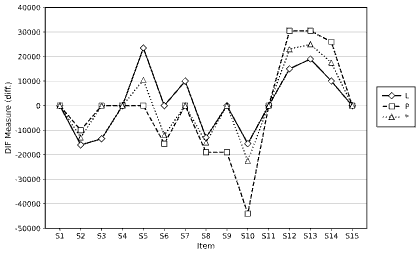
Students often experience persistent conceptual difficulties in static fluid topics due to fragmented understanding and reliance on intuitive reasoning. Therefore, the development of valid and reliable diagnostic instruments is essential to accurately assess students' conceptual understanding. This study aims to develop and validate a Static Fluid Concept Understanding Test covering hydrostatics, buoyancy, Pascal's law, and surface tension. The research employed an instrument development and validation design using Rasch modeling to evaluate item functioning, dimensionality, and measurement quality. Data were collected from 54 secondary students and supported by expert validation. The results indicate high item reliability (0.93) with stable item calibration, although person reliability is relatively low, likely due to limited variability in student ability. Several items exhibit near-misfit patterns, reflecting variation in students' reasoning in conceptually demanding contexts. Dimensionality analysis suggests essential unidimensionality, while Differential Item Functioning (DIF) analysis shows no clear systematic bias across gender. In conclusion, the instrument demonstrates strong item-level measurement quality and potential as a diagnostic tool. In practice, it can help physics teachers identify students' misconceptions and design targeted instructional strategies. However, further validation with larger, more diverse samples is recommended to enhance its precision and generalizability.
References
[1] S. I. Hofer, R. Schumacher, and H. Rubin, "The test of basic Mechanics Conceptual Understanding (bMCU): using Rasch analysis to develop and evaluate an efficient multiple choice test on Newton's mechanics," Int. J. STEM Educ., vol. 4, no. 1, p. 18, Dec. 2017, doi: https://doi.org/10.1186/s40594-017-0080-5
[2] J. L. Docktor and J. P. Mestre, "Synthesis of discipline-based education research in physics," Phys. Rev. Spec. Top. - Phys. Educ. Res., vol. 10, no. 2, p. 020119, Sep. 2014, doi: https://doi.org/10.1103/PhysRevSTPER.10.020119
[3] D. E. Brown, "Students' Conceptions as Dynamically Emergent Structures," Sci. Educ., vol. 23, no. 7, pp. 1463-1483, Jul. 2014, doi: https://doi.org/10.1007/s11191-013-9655-9
[4] E. Kuo, M. M. Hull, A. Elby, and A. Gupta, "Assessing mathematical sensemaking in physics through calculation-concept crossover," Phys. Rev. Phys. Educ. Res., vol. 16, no. 2, p. 020109, Jul. 2020, doi: https://doi.org/10.1103/PhysRevPhysEducRes.16.020109
[5] D. Naylor and S. S. H. Tsai, "Archimedes' principle with surface tension effects in undergraduate fluid mechanics," Int. J. Mech. Eng. Educ., vol. 50, no. 3, pp. 749-763, Jul. 2022, doi: https://doi.org/10.1177/03064190211055431
[6] G. C. Nihous, "Notes on hydrostatic pressure," J. Ocean Eng. Mar. Energy, vol. 2, no. 1, pp. 105-109, Feb. 2016, doi: https://doi.org/10.1007/s40722-015-0035-1
[7] G. T. Pickett, "Volume Integral of the Pressure Gradient and Archimedes' Principle," Jul. 2014, [Online]. Available: http://arxiv.org/abs/1407.7562
[8] H. Saputro, L. Yuliati, P. Parno, S. Sunaryono, P. H. Winingsih, and R. Sebastian, "An Analysis of Senior High School Students' Problem-Solving Ability in Static Fluid Physics," in Proceedings of International Conference on Teacher Profession Education, Yogyakarta: Universitas Sarjana Wiyata Tamansiswa, 2025, pp. 32-40. [Online]. Available: https://seminar.ustjogja.ac.id/index.php/ICoTPE/article/view/3542
[9] A. A. diSessa, "Toward an Epistemology of Physics," Cogn. Instr., vol. 10, no. 2-3, pp. 105-225, Apr. 1993, doi: https://doi.org/10.1080/07370008.1985.9649008
[10] M. E. Loverude, C. H. Kautz, and P. R. L. Heron, "Helping students develop an understanding of Archimedes' principle. I. Research on student understanding," Am. J. Phys., vol. 71, no. 11, pp. 1178-1187, Nov. 2003, doi: https://doi.org/10.1119/1.1607335
[11] M. Goszewski, A. Moyer, Z. Bazan, and D. J. Wagner, "Exploring student difficulties with pressure in a fluid," 2013, pp. 154-157. doi: https://doi.org/10.1063/1.4789675
[12] U. Besson, "Students' conceptions of fluids," Int. J. Sci. Educ., vol. 26, no. 14, pp. 1683-1714, Nov. 2004, doi: https://doi.org/10.1080/0950069042000243745
[13] Estianinur, Parno, E. Latifah, and M. Ali, "Exploration of students' conceptual understanding in static fluid through experiential learning integrated STEM with formative assessment," 2021, p. 050010. doi: https://doi.org/10.1063/5.0043129
[14] M. Planinic, W. J. Boone, A. Susac, and L. Ivanjek, "Rasch analysis in physics education research: Why measurement matters," Phys. Rev. Phys. Educ. Res., vol. 15, no. 2, p. 020111, Jul. 2019, doi: https://doi.org/10.1103/PhysRevPhysEducRes.15.020111
[15] T. G. Bond and C. M. Fox, Applying the Rasch Model. Psychology Press, 2013. doi: https://doi.org/10.4324/9781410614575
[16] W. J. Boone, "Rasch Analysis for Instrument Development: Why, When, and How?," CBE-Life Sci. Educ., vol. 15, no. 4, p. rm4, Dec. 2016, doi: https://doi.org/10.1187/cbe.16-04-0148
[17] M. G. Purwanto, A. Suhandi, B. Coştu, A. Samsudin, and M. Nurtanto, "Static Fluid Concept Inventory (SFCI): A Gender Gap Analysis using Rasch Model to Promote a Diagnostic Test Instrument on Students' Conception," Int. J. Adv. Sci. Technol., vol. 29, no. 6, pp. 3798-3812, 2020.
[18] T. Septiantini et al., "Static Fluid Four-Tier Instrument (SFFTI): Develop and Identify K-11 Brebes-Scholars' Alternative Conception with Rasch Analysis," vol. 29, pp. 3190-3199, May 2020.
[19] N. Nurdini, A. Suhandi, T. Ramlan Ramalis, A. Samsudin, N. J. Fratiwi, and B. Coştu, "Developing Multitier Instrument of Fluids Concepts (MIFO) to Measure Student's Conception: A Rasch Analysis Approach," J. Adv. Res. Dyn. Control Syst., vol. 12, no. 6, pp. 3069-3083, 2020, doi: http://doi.org/10.5373/jardcs/v12i6/s20201273.
[20] W. J. Boone, J. R. Staver, and M. S. Yale, Rasch Analysis in the Human Sciences. Dordrecht: Springer Netherlands, 2014. doi: https://doi.org/10.1007/978-94-007-6857-4
[21] L. Bao and E. F. Redish, "Model analysis: Representing and assessing the dynamics of student learning," Phys. Rev. Spec. Top. - Phys. Educ. Res., vol. 2, no. 1, p. 010103, Feb. 2006, doi: https://doi.org/10.1103/PhysRevSTPER.2.010103
[22] I. D. A. Irawan, R. M. Indraloka, N. A. Basri, U. Salmah, and P. Parno, "Analysis of Concept Understanding Test Items on Static Fluid Material Using Rasch Model," J. Pendidik. Fis., vol. 13, no. 1, pp. 1-13, Jan. 2025, doi: https://doi.org/10.26618/jpf.v13i1.15687
[23] K. Khusaini, N. Azizah, P. Suwasono, C. I. Yogihati, and A. D. Andriani, "Rasch Model Application: Identification of Students' Conceptual Understanding of Static Fluid," J. Pendidik. Fis. Indones., vol. 21, no. 1, pp. 54-68, Jun. 2025, doi: https://doi.org/10.15294/jpfi.v21i1.15023
[24] M. Müller, "Item fit statistics for Rasch analysis: can we trust them?," J. Stat. Distrib. Appl., vol. 7, no. 1, p. 5, Dec. 2020, doi: https://doi.org/10.1186/s40488-020-00108-7
[25] F. Shaw, "Descriptive IRT vs. Prescriptive Rasch," Rasch Measurement Transactions.
[26] R. F. DeVellis and C. T. Thorpe, Scale Development: Theory and Applications. Sage Publications, Inc., 2021.
[27] W. Boone and J. Rogan, "Rigour in quantitative analysis: The promise of Rasch analysis techniques," African J. Res. Math. Sci. Technol. Educ., vol. 9, no. 1, pp. 25-38, Jan. 2005, doi: https://doi.org/10.1080/10288457.2005.10740574
[28] T. N. Diyana, S. Sutopo, and D. Haryoto, "The analysis of college students difficulty in acquiring static fluid concept," Momentum Phys. Educ. J., pp. 11-18, May 2020, doi: https://doi.org/10.21067/mpej.v4i1.4113
[29] V. R. Mustikasari, M. Annisa, and M. Munzil, "Identifikasi Miskonsepsi Konsep Tekanan Zat Siswa Kelas VIII-C SMPN 1 Karangploso Semester Genap Tahun Pelajaran 2017-2018," J. Pembelajaran Sains, vol. 1, no. 2, pp. 39-50, 2017, doi: http://dx.doi.org/10.17977/um033v1i2p39-50.
[30] F. N. Anjelin, F. Ailiyah, B. R. Kurniawan, and M. N. Kholifah, "Identifikasi Penguasaan Konsep Materi Hukum Archimedes dan Hukum Pascal Berbantuan Quizizz," Exp. J. Sci. Educ., vol. 1, no. 1, pp. 19-27, Dec. 2020, doi: https://doi.org/10.18860/experiment.v1i1.11114
[31] Sri Rahmadani Pulu and Abd. Haji Amahoru, "Analisis Miskonsepsi Mahasiswa pada Pembelajaran IPA menggunakan Tes Diagnostik Multiple Choice Berbantuan CRI (Certainty of Response Index)," J. Pendidik. MIPA, vol. 13, no. 2, pp. 478-486, Jun. 2023, doi: https://doi.org/10.37630/jpm.v13i2.1039
[32] I. G. M. Raga, "Identifikasi pemahaman konsep mahasiswa pada pokok bahasan fluida statis ditinjau dari teori resource," Universitas Negeri Malang, 2022.
[33] A. B. Rizkiyati, B. Supriadi, and M. Maryani, "Tingkat pemahaman konsep siswa SMKN 5 Jember pada pokok bahasan fluida statis menggunakan tes diagnostik four tier test," in Prosiding Seminar Nasional Pendidikan Fisika, Jember: Universitas Jember, 2018, pp. 197-202. [Online]. Available: https://garuda.kemdiktisaintek.go.id/documents/detail/878159
[34] V. M. Salma, S. E. Nugroho, and I. Akhlis, "Pengembangan E-Diagnostic Test Untuk Mengidentifikasi Pemahaman Konsep Fisika Siswa SMA Pada Pokok Bahasan Fluida Statis," Unnes Phys. Educ. J., vol. 5, no. 1, 2016, doi: https://doi.org/10.15294/upej.v5i1.12701.
[35] I. N. A. Dewi, S. Kusairi, and L. Yuliati, "Miskonsepsi Siswa SMA pada Materi Hukum Archimedes'," in Prosiding Seminar Nasional Tahun 2016, Surabaya: Universitas Negeri Surabaya, 2016, pp. 339-343. [Online]. Available: https://lib.um.ac.id/wp-content/uploads/2017/09/Miskonsepsi-Siswa-SMA-Pada-Materi-Hukum-Archimedes.pdf
[36] G. Pescaroli, O. Velazquez, I. Alcántara-Ayala, C. Galasso, P. Kostkova, and D. Alexander, "A Likert Scale-Based Model for Benchmarking Operational Capacity, Organizational Resilience, and Disaster Risk Reduction," Int. J. Disaster Risk Sci., vol. 11, no. 3, pp. 404-409, Jun. 2020, doi: https://doi.org/10.1007/s13753-020-00276-9
[37] B. Sumintono and W. Widhiarso, Aplikasi Pemodelan Rasch: pada Assessment Pendidikan. Penerbit Trim Komunikata, 2015.
[38] J. M. Linacre, A. W. Heinemann, B. D. Wright, C. V. Granger, and B. B. Hamilton, "The structure and stability of the functional independence measure," Arch. Phys. Med. Rehabil., vol. 75, no. 2, pp. 127-132, Feb. 1994, doi: https://doi.org/10.1016/0003-9993(94)90384-0
[39] J. M. Linacre, "A User's Guide to Winsteps: Rasch-Model Computer Programs," Winsteps.com. Accessed: Apr. 29, 2026. [Online]. Available: https://www.winsteps.com/a/Winsteps-Manual.pdf
[40] J. M. Linacre, "Data variance explained by Rasch measures," Rasch Measurement Transactions. Accessed: Apr. 29, 2026. [Online]. Available: https://www.rasch.org/rmt/rmt201a.htm
[41] T. Bond, Z. Yan, and M. Heene, Applying the Rasch Model: Fundamental Measurement in the Human Sciences. New York: Routledge, 2020. doi: https://doi.org/10.4324/9780429030499
[42] Y. Yang et al., "Psychometric evaluation of the academic involution scale for college students in China: An application of Rasch analysis," Front. Psychol., vol. 14, Feb. 2023, doi: https://doi.org/10.3389/fpsyg.2023.1135658
[43] Y. Jin, C. A. Rodriguez, L. Shah, and G. T. Rushton, "Examining the Psychometric Properties of the Redox Concept Inventory: A Rasch Approach," J. Chem. Educ., vol. 97, no. 12, pp. 4235-4244, Dec. 2020, doi: https://doi.org/10.1021/acs.jchemed.0c00479
[44] C. R. Gette, M. Kryjevskaia, M. R. Stetzer, and P. R. L. Heron, "Probing student reasoning approaches through the lens of dual-process theories: A case study in buoyancy," Phys. Rev. Phys. Educ. Res., vol. 14, no. 1, p. 010113, Mar. 2018, doi: https://doi.org/10.1103/PhysRevPhysEducRes.14.010113
[45] R. Duit and D. F. Treagust, "Conceptual change: A powerful framework for improving science teaching and learning," Int. J. Sci. Educ., vol. 25, no. 6, pp. 671-688, Jun. 2003, doi: https://doi.org/10.1080/09500690305016
[46] C. Cari, S. N. Pratiwi, H. Affandy, and D. A. Nugraha, "Investigation of undergraduate student concept understanding on Hydrostatic Pressure using two-tier test," J. Phys. Conf. Ser., vol. 1511, no. 1, p. 012085, Apr. 2020, doi: https://doi.org/10.1088/1742-6596/1511/1/012085
[47] N. Bessas, E. Tzanaki, D. Vavougios, and V. P. Plagianakos, "Diagnosing students' misconception in Hydrostatic Pressure through a 4-tier test," Heliyon, vol. 10, no. 23, p. e40425, Dec. 2024, doi: https://doi.org/10.1016/j.heliyon.2024.e40425
[48] G. Ozkan and G. S. Selcuk, "Facilitating conceptual change in students' understanding of concepts related to pressure," Eur. J. Phys., vol. 37, no. 5, p. 055702, Sep. 2016, doi: https://doi.org/10.1088/0143-0807/37/5/055702
[49] D. Andrich, Rasch Models for Measurement. 2455 Teller Road, Thousand Oaks California 91320 United States of America: SAGE Publications, Inc., 1988. doi: https://doi.org/10.4135/9781412985598
[50] D. Kaltakci Gurel, A. Eryilmaz, and L. C. McDermott, "A Review and Comparison of Diagnostic Instruments to Identify Students' Misconceptions in Science," EURASIA J. Math. Sci. Technol. Educ., vol. 11, no. 5, Oct. 2015, doi: https://doi.org/10.12973/eurasia.2015.1369a
[51] E. Valencia, "Gender-biased evaluation or actual differences? Fairness in the evaluation of faculty teaching," High. Educ., vol. 83, no. 6, pp. 1315-1333, Jun. 2022, doi: https://doi.org/10.1007/s10734-021-00744-1
Downloads
Published
Issue
Section
License
Copyright (c) 2026 Delilah Nur Maisyaroh, Sutopo Sutopo, Parno Parno

This work is licensed under a Creative Commons Attribution-NonCommercial 4.0 International License.